Applications are now open for the Academic Session 2026-27.
Open
Applications are now open for the Academic Session 2026-27.
Applications are now open for the Academic Session 2026-27.
Applications are now open for the Academic Session 2026-27.

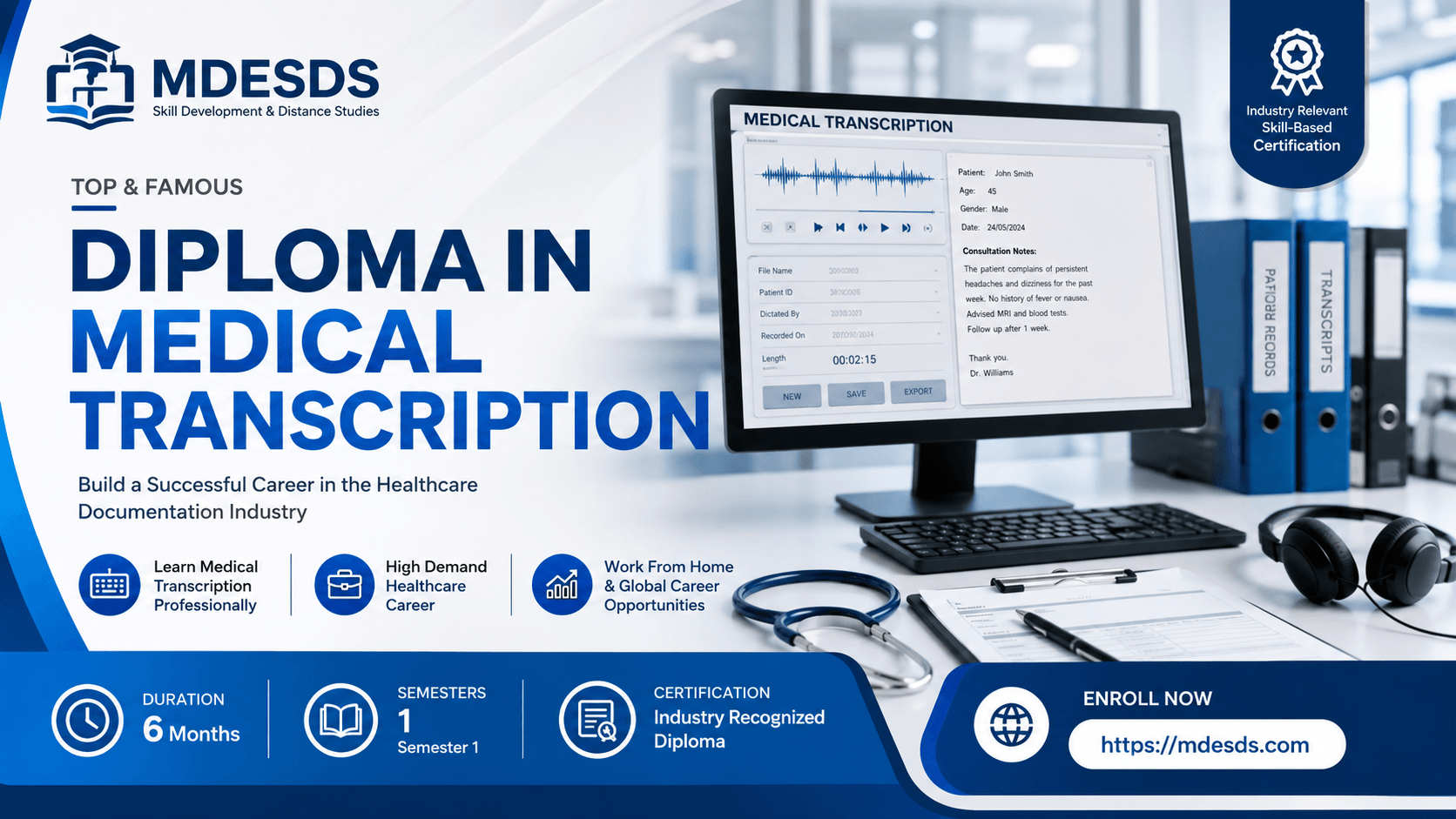
Earn your Diploma In Medical Transcription from MDESDS. Master anatomy, cardiology, and medical language in 6 months through flexible hybrid learning.
The global healthcare ecosystem relies heavily on accurate, timely, and secure documentation. Every time a physician meets a patient, performs a surgery, or prescribes a medication, a detailed medical record must be created. This is where professional medical transcriptionists come into play. They act as the vital bridge between spoken clinical dictation and permanent electronic health records (EHR).
If you are looking for a rewarding, stable career path that combines healthcare, technology, and language skills, the Diploma In Medical Transcription offered by MDESDS is your perfect launchpad. This comprehensive program is designed to equip you with the precise technical skills, medical vocabulary, and analytical abilities required to excel in the modern healthcare documentation industry. Whether you want to work in a corporate hospital setup or enjoy the flexibility of remote work, this course prepares you for global opportunities.
A Diploma In Medical Transcription is a specialized professional training program that teaches individuals how to listen to voice recordings dictated by healthcare professionals and convert them into clearly formatted, legally compliant written medical reports.
Medical transcription is far more than just fast typing. It requires a deep understanding of medical terminology, complex human anatomy, pharmacology, surgical procedures, and diagnostic tools. At MDESDS, this diploma program translates complex medical jargon into structured learning. Over a duration of 6 months, students are trained to recognize various accents, understand clinical contexts, and master the stringent formatting standards mandated by international healthcare laws. Offered via a highly flexible hybrid learning mode, the program combines the convenience of online self-paced study with the practical rigor of face-to-face interactive sessions.
The Diploma In Medical Transcription is systematically structured into a focused 1-semester curriculum delivered over a 6-month duration. MDESDS has curated this syllabus in alignment with current global healthcare documentation benchmarks to ensure you are job-ready from day one.
The first semester lays down the foundation of medical linguistics and deep-dives into high-demand clinical specialties.
What You Will Learn: This subject introduces you to the structural organization of the human body and how its major organ systems function. You will study the skeletal, muscular, circulatory, nervous, and respiratory systems.
Practical Benefits: You cannot accurately transcribe what you do not understand. Knowing anatomy allows you to instantly recognize clinical context, helping you differentiate between similar-sounding anatomical terms and preventing critical errors in medical charts.
Skills Gained: Deep knowledge of human biology, understanding of pathological states, and the ability to visualize clinical procedures during dictation.
What You Will Learn: This module focuses on the etymology of medical language. You will learn to deconstruct complex medical terms into prefixes, suffixes, combining forms, and root words.
Practical Benefits: Instead of memorizing thousands of individual medical terms, you will learn the "code" of medical language. If a doctor dictates a rare or unfamiliar diagnostic term, your understanding of basic word structure will allow you to spell and transcribe it perfectly.
Skills Gained: Linguistic analysis, advanced medical spelling proficiency, and rapid vocabulary decoding.
What You Will Learn: A specialized look into the anatomy of the human eye, vision disorders, ophthalmic surgeries, and diagnostic tools used by optometrists and ophthalmologists.
Practical Benefits: Ophthalmology reports are notorious for complex drug names, abbreviations, and highly specific surgical tools (like phacoemulsification instruments). This module ensures you can handle specialized eye clinic dictations with ease.
Skills Gained: Mastery of ophthalmic terminology, familiarity with vision care pharmacology, and accurate transcription of corrective surgery notes.
What You Will Learn: Spread across two intensive modules, this subject covers the cardiovascular system, heart diseases, electrocardiography (ECG/EKG) interpretation reports, cardiac catheterization procedures, and advanced cardiac life support terminologies.
Practical Benefits: Cardiology is one of the highest-volume specialties in the medical transcription industry. Mastery of cardiovascular terms, cardiac medications, and surgical jargon significantly increases your market value and speed as a transcriber.
Skills Gained: Expertise in cardiovascular clinical phrasing, proficiency in transcribing operative reports for heart surgeries, and a thorough understanding of cardiac drug classifications.
The Diploma In Medical Transcription is highly versatile and open to a wide range of career seekers. This program is ideal for:
Life Sciences & Science Graduates: Individuals with a background in biology, biotechnology, pharmacy, or nursing who want a non-clinical healthcare career.
Language & English Graduates: Candidates with strong language skills who want to apply their linguistic talents to a lucrative, specialized technical field.
Career Switchers: Professionals from data entry, customer service, or general secretarial backgrounds looking to upgrade to a stable, high-growth industry.
Stay-at-Home Parents and Freelancers: Anyone seeking a legitimate, skill-based profession that offers massive potential for remote, work-from-home employment.
To enroll in the Diploma In Medical Transcription at MDESDS, candidates must have completed their 10+2 (High School) examination from a recognized board. While a background in science is advantageous, it is not mandatory. A basic command of the English language and elementary computer literacy are all you need to get started.
Investing 6 months in this professional diploma unlocks several unique professional advantages:
Flexible Hybrid Learning Mode: Our hybrid learning structure ensures you do not have to disrupt your current personal or professional commitments. You can access high-quality digital lectures from home while benefiting from essential hands-on lab sessions and peer interactions.
Rapid Career Entry: Unlike lengthy multi-year degree programs, this 6-month diploma streamlines your education, focusing purely on industry-relevant skills so you can start earning quickly.
High Work-From-Home Potential: Medical transcription is one of the original and most resilient remote industries. Successful completion of this course gives you the credentials to apply for remote roles globally.
Immunity to Economic Downturns: The healthcare industry is recession-proof. As long as patients visit doctors, medical reports will need to be generated, ensuring consistent demand for skilled transcription professionals.
The completion of your Diploma In Medical Transcription opens up a diverse array of professional avenues. The demand for accurate medical records is expanding rapidly across international markets, particularly in the US, UK, and Middle East, where documentation laws are exceptionally strict.
Medical Transcriptionist (MT): Listen to and transcribe initial patient histories, physical exams, and discharge summaries.
Medical Editor / Proofreader: Review and edit reports generated by Speech Recognition Technology (SRT) to ensure 100% accuracy.
Quality Assurance (QA) Specialist: Oversee transcription teams, perform spot checks, and maintain quality benchmarks for healthcare clients.
Medical Scribe: Work live (virtually) alongside physicians during patient consultations to document encounters in real-time.
Healthcare Documentation Specialist: Manage record workflows within large hospital data management departments.
MDESDS stands out as a premier institution dedicated to professional excellence and vocational skill development. When you choose our Diploma In Medical Transcription, you are investing in an education designed by industry experts.
Curriculum Built by Experts: Our syllabus is curated in tandem with international healthcare documentation standards, ensuring your skills are relevant globally.
Comprehensive Student Support: We bridge the gap between classroom theory and real-world execution through extensive audio dictation practices featuring diverse regional accents.
State-of-the-Art Hybrid Infrastructure: Experience seamlessly integrated learning portals, updated digital resources, and dedicated mentor support.
Placement Assistance: MDESDS offers robust career support, helping students craft resumes, practice mock interviews, and connect with top healthcare documentation firms.
Do not wait to build a career that offers stability, growth, and flexibility. Admissions are open for the upcoming batch of the Diploma In Medical Transcription at MDESDS.
The Diploma In Medical Transcription course is designed to provide practical knowledge, professional skills, and industry-relevant training. With a duration of 6, this program helps students develop the expertise required for academic and professional success.
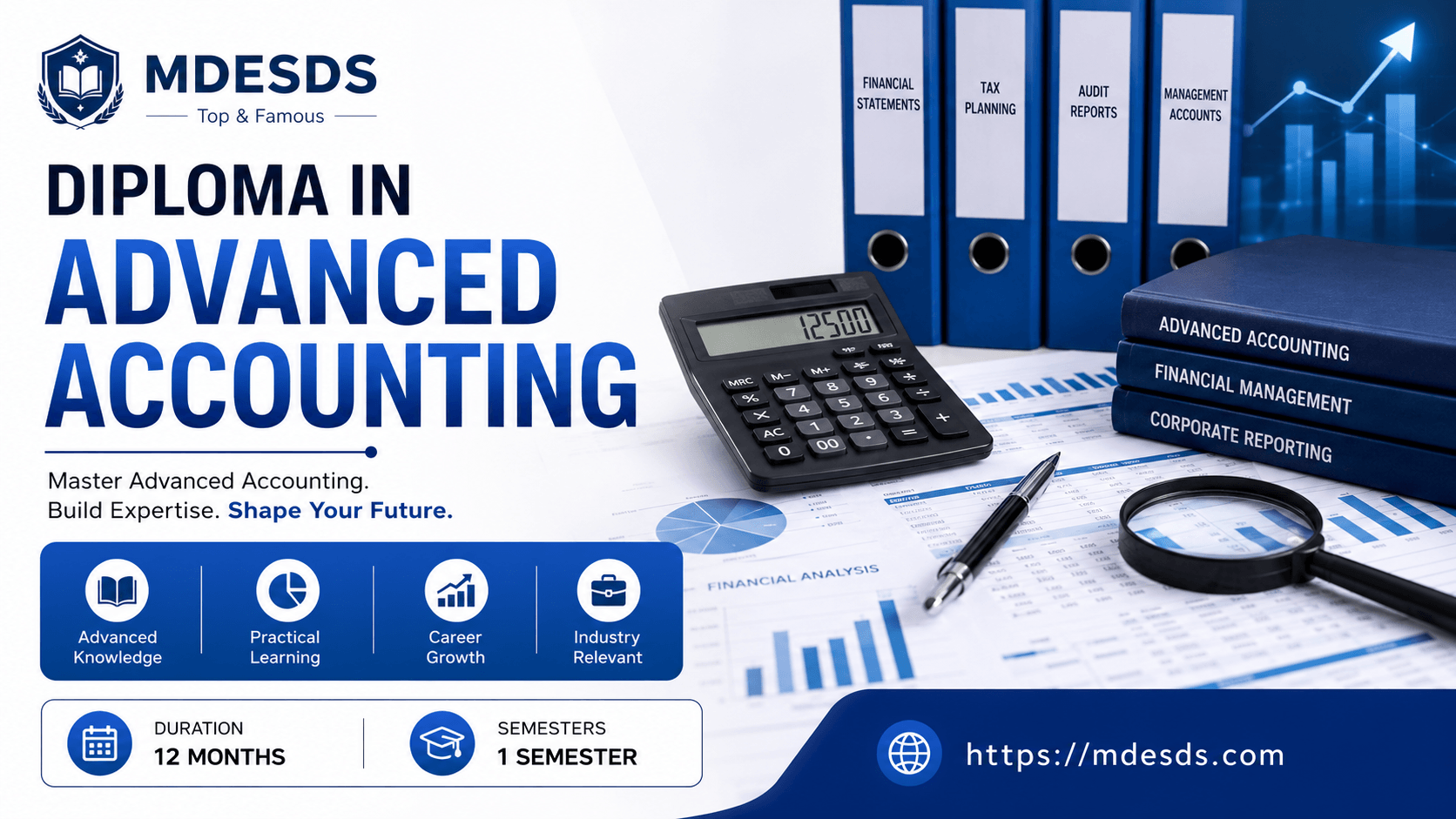
Master corporate finance with our 12-month Diploma In Advanced Accounting at MDESDS. Enjoy hybrid learning, manual accou...
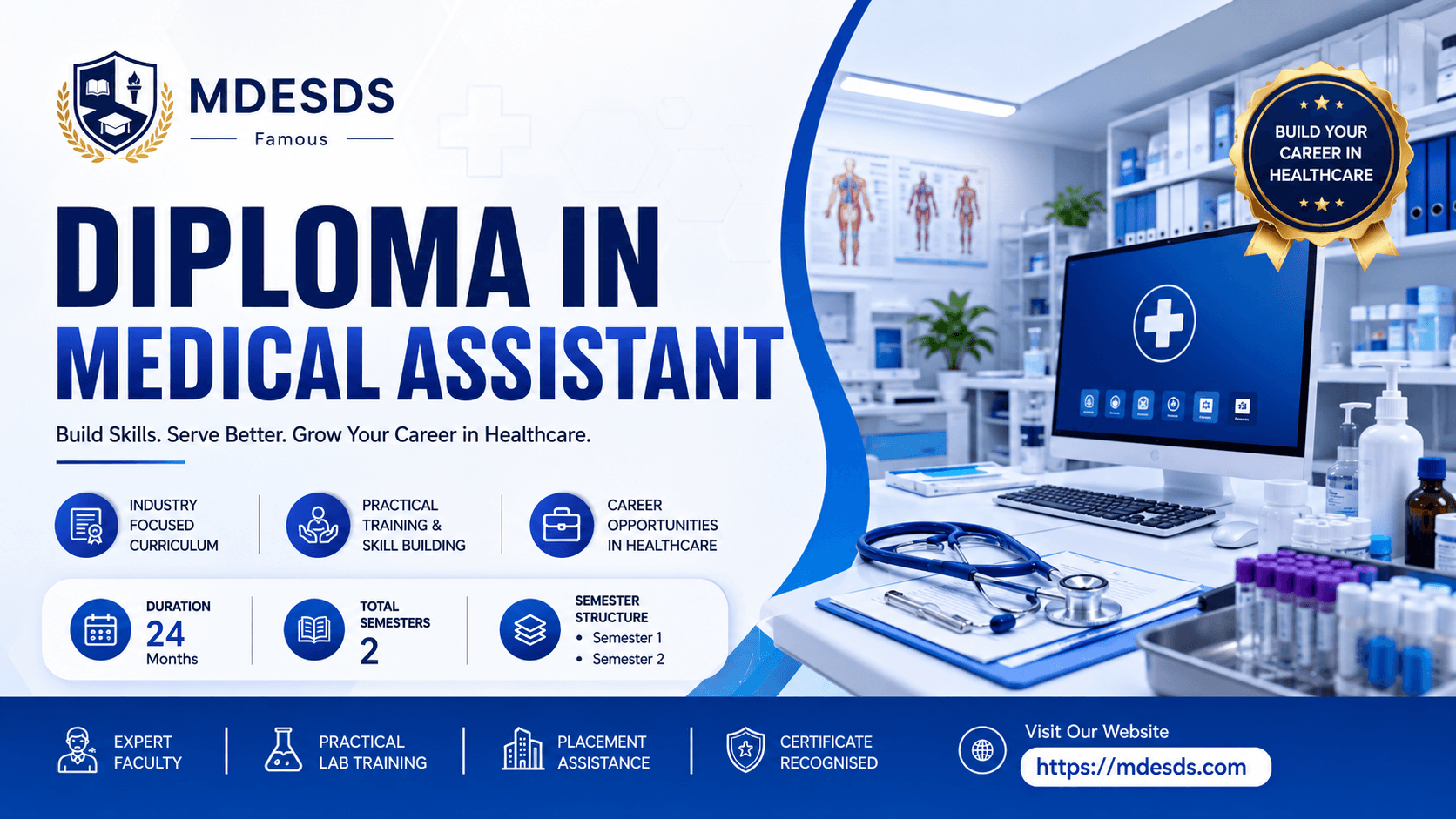
Advance your healthcare career with MDESDS's 12-month hybrid Diploma In Medical Assistant. Gain practical patient care s...
Launch your hospitality career with MDESDS's 12-month Diploma in Food & Beverage Service. Gain hands-on skills through h...