Applications are now open for the Academic Session 2026-27.
Open
Applications are now open for the Academic Session 2026-27.
Applications are now open for the Academic Session 2026-27.
Applications are now open for the Academic Session 2026-27.

Master hospitality with MDESDS's 24-month Diploma In Food & Beverage Service. Learn hybrid modules, practical service skills, and launch a global hotel career.
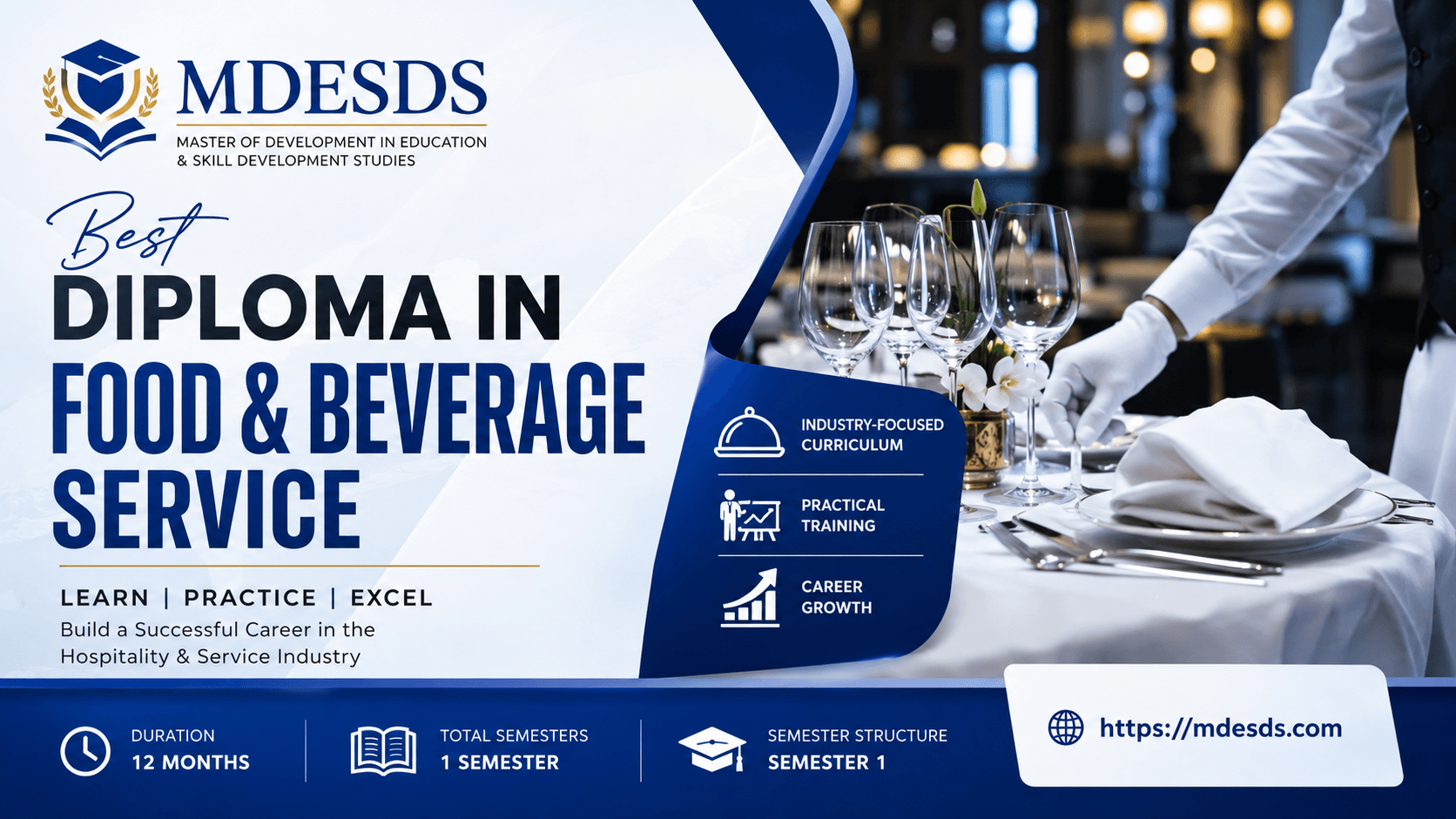
The global hospitality industry is experiencing a massive boom. From luxury five-star resorts and fine dining establishments to boutique cruise liners and high-end event management firms, the demand for highly skilled professionals never stops. At the heart of this thriving world is the food and beverage department—the primary revenue driver and the core of guest satisfaction for most hospitality brands.
If you have a passion for culinary presentation, guest interaction, and the fast-paced environment of luxury service, building a structured foundation is your first step. A generic understanding of hospitality is no longer enough to secure premium roles. Top-tier employers look for specialized professionals who understand the intricate mechanics of service flow, mixology, hygiene compliance, and operational communication.
Entering this field requires a balance of theoretical strategy and intensive hands-on execution. Choosing a comprehensive training path ensures you do not just get a foot in the door, but actively fast-track your trajectory into hospitality management.
A Diploma In Food & Beverage Service is a specialized, industry-aligned program designed to equip aspiring hospitality professionals with the technical operational skills and supervisory expertise required in modern food service environments. This program bridges the gap between basic culinary execution and executive guest satisfaction. It focuses heavily on the art of table service, beverage mechanics, banquet management, menu engineering, and strict frontline hygiene protocols.
At MDESDS, this program is delivered as a robust 24-month professional diploma. Recognizing the needs of contemporary learners, the course utilizes a flexible hybrid learning mode. This allows students to master theoretical management concepts through structured online interfaces while dedicating crucial hours to physical, hands-on practical simulations and industry interactions.
Over a duration of 24 months, students transition from foundational trainees to industry-ready professionals capable of managing high-volume food outlets, handling premium international clienteles, and executing complex banquet operations with absolute precision.
The Diploma In Food & Beverage Service at MDESDS is meticulously divided into two comprehensive semesters spread across a 24-month duration. The curriculum blends core service methodologies with vital business communication and technical awareness tools, ensuring a well-rounded managerial foundation.
The first phase of the 24-month program focuses on building core operational competencies, safety frameworks, and the physical mechanics of premium guest service.
F & B Service (Theory & Practice)
Practical Benefits: This subject acts as the backbone of the entire diploma. Students learn the layout of modern restaurants, the classification of service gear, and the exact protocols for setting up diverse dining environments.
Skills Gained: Mastery of cover setups, handling complex table layings, understanding silver service, plate carrying techniques, and managing station mise-en-place (preparing the environment before guests arrive).
Hygiene And Sanitation
Practical Benefits: Maintaining flawless hygiene standards is non-negotiable in international hospitality. This module covers food safety regulations, cross-contamination prevention, personal grooming benchmarks, and waste management practices.
Skills Gained: Implementation of HACCP (Hazard Analysis Critical Control Point) frameworks, sanitation chemical handling, deep-cleaning execution, and health compliance reporting.
Carrying The Food Service Tray
Practical Benefits: A highly technical physical skill that separates amateurs from seasoned experts. This module trains students in balancing weight distribution, moving effortlessly across crowded dining floors, and preventing workplace breakages.
Skills Gained: Perfect physical posture, high-strain balancing techniques, stack loading protocols, and synchronized group service movements.
Safety At Work And Basic First Aid
Practical Benefits: High-volume hospitality environments carry inherent risks like burns, slips, and cuts. This training ensures that students can act as immediate first responders during kitchen or dining floor emergencies.
Skills Gained: CPR execution, burn management, choking response procedures, evacuation handling, and workplace hazard mapping.
The second phase of the hybrid learning journey shifts toward specialized product knowledge, technical business operations, and refined guest communication.
Service At Breakfast, Lunch And Dinner
Practical Benefits: Dining dynamics change radically depending on the time of day. Students learn to adapt to the fast-paced nature of morning buffets, corporate lunch turnovers, and formal, slow-paced evening fine dining.
Skills Gained: Buffet management, high-speed table clearance, multi-course fine dining etiquette, wine pairing coordination, and order-taking accuracy.
Types Of Menu And Cuisines
Practical Benefits: Understanding what is being served is essential for upselling. This module decodes international culinary styles, dietary restrictions, allergens, and standard menu configurations like À La Carte and Table d'Hôte.
Skills Gained: Menu interpretation, allergen identification advice, cross-selling and upselling techniques, and professional culinary terminology.
Non-Alcoholic Beverages
Practical Benefits: The mocktail, specialty coffee, and premium tea markets are major revenue drivers. This subject delves into the preparation, presentation, and service of premium non-alcoholic refreshments.
Skills Gained: Barista skills, mixology for mocktails, brewing temperatures for specialized teas, inventory management, and garnishing arts.
Business Communication
Practical Benefits: Hospitality is entirely centered around human interaction. Students practice handling demanding guests, resolving service complaints smoothly, and coordinating across internal departments like the kitchen and front office.
Skills Gained: Active listening, corporate email writing, conflict de-escalation, body language optimization, and verbal persuasion.
Computer Awareness
Practical Benefits: Modern restaurants rely on technology for point-of-sale systems, inventory tracking, and seat reservations. This module ensures students are completely fluent in using digital hospitality infrastructure.
Skills Gained: POS (Point of Sale) software operation, digital reservation booking, digital inventory logging, and spreadsheet calculation basics.
The Diploma In Food & Beverage Service is carefully structured to welcome a diverse pool of ambitious individuals. You should consider enrolling if you are:
High School Graduates: Students looking to enter an actionable career track straight after finishing school instead of spending years in purely theoretical degrees.
Aspiring Restaurateurs: Individuals who plan to launch their own cafes, fine dining venues, or catering businesses and want to master the ground-level operations first.
Career Switchers: Professionals working in retail, customer service, or administrative jobs who want to transition into the fast-paced, high-reward world of global hospitality.
Cruiseline & Global Job Aspirants: Candidates looking for specialized qualifications that are recognized worldwide, opening doors to careers on luxury cruise ships and international hotels.
Enrolling in this professional program provides clear, measurable advantages for your long-term career:
Flexible Hybrid Learning: The hybrid delivery mode ensures you do not have to put your life completely on hold. You balance flexible digital learning modules with highly targeted, practical training environments.
Rapid Employment Entry: Unlike long-term degrees that take 3 to 4 years, this focused 24-month diploma compresses high-value training to get you industry-ready and earning much faster.
Comprehensive Skill Development: You do not just learn how to serve food; you master technical computing, advanced communication, business safety, and beverage design.
Confidence & Professional Polish: The rigorous focus on grooming, business communication, and fine dining etiquette builds an impressive professional presence that serves you well throughout your career.
Completing your Diploma In Food & Beverage Service from MDESDS unlocks doors across a variety of lucrative sectors worldwide. The hospitality field offers clear vertical growth from entry-level execution to senior strategic operations.
Luxury Hotels & Resorts: Join elite international hospitality brands as a food service associate, banquet coordinator, or executive trainee.
Fine Dining & Specialty Restaurants: Work in premium independent or chain restaurants managing high-profile clienteles and curation flows.
Luxury Cruise Lines: Travel the globe while earning competitive tax-free salaries by handling upscale dining operations on international waters.
Aviation Hospitality: Elevate your career by stepping into premium airport lounges or cabin crew service roles.
Banquets & Convention Centers: Direct massive corporate events, destination weddings, and high-volume catering layouts.
MDESDS stands out as an institution focused on real-world capabilities and student outcomes.
Curriculum Created by Experts: Every single module is designed in collaboration with active hospitality leaders to ensure what you learn matches current industry needs.
Balanced Hybrid Learning System: We have perfected the blend of online theoretical modules and intensive offline technical sessions.
Modern Infrastructure: Students train with contemporary tools, POS systems, and premium dining equipment setups.
Dedicated Job Placement Support: MDESDS provides comprehensive assistance with resume building, interview practice, and connections to major industry players to launch your career smoothly.
Do not delay your professional ambitions. Take control of your career path with a highly specialized, practical education that is sought after by luxury brands worldwide. Learn from the best, master real-world skills, and transform your passion for service into a rewarding, lifelong profession.
The Diploma In Food & Beverage Service course is designed to provide practical knowledge, professional skills, and industry-relevant training. With a duration of 24, this program helps students develop the expertise required for academic and professional success.
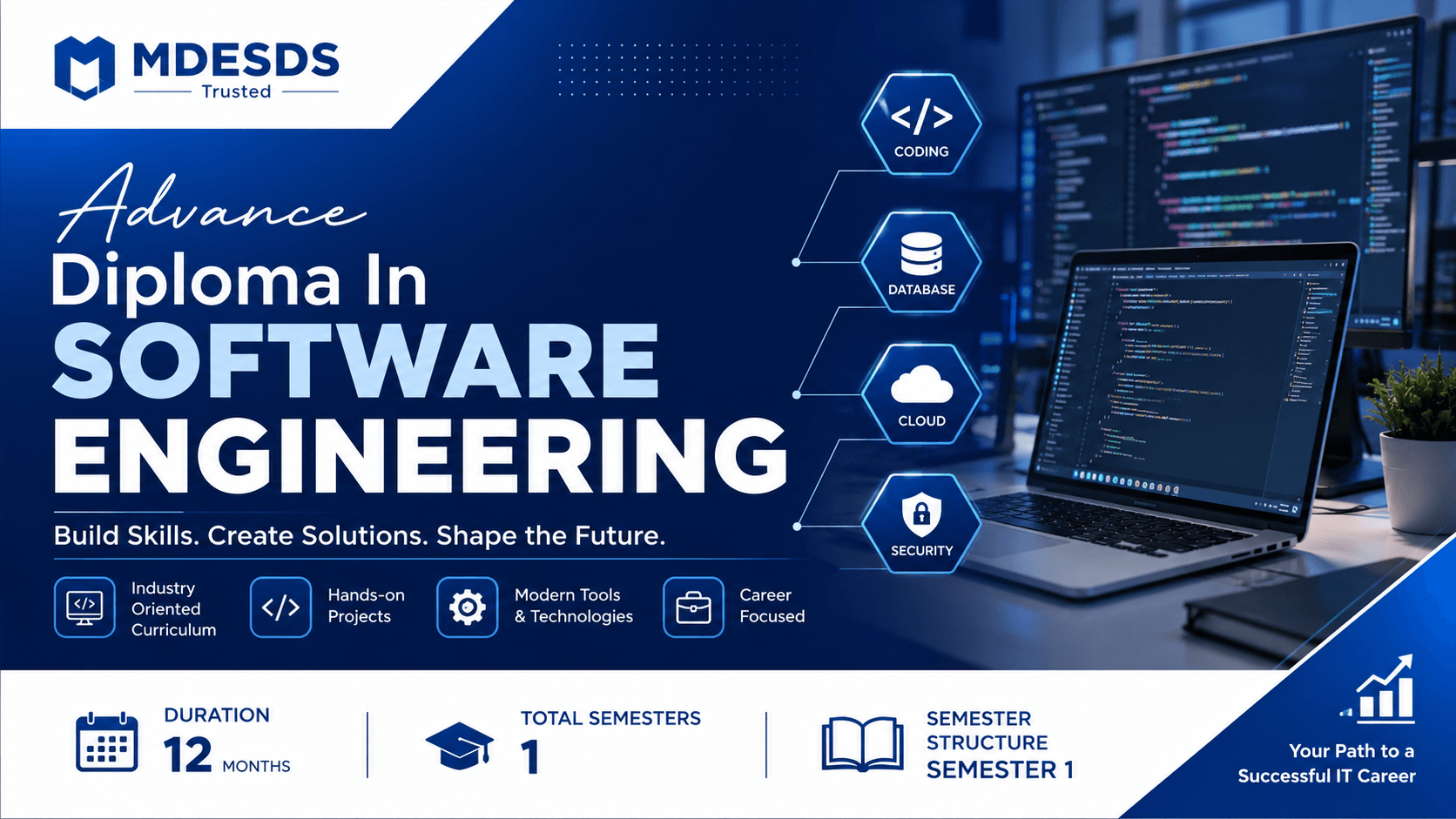
Elevate your tech career with MDESDS's Advance Diploma In Software Engineering. Master coding, soft skills, and more in ...
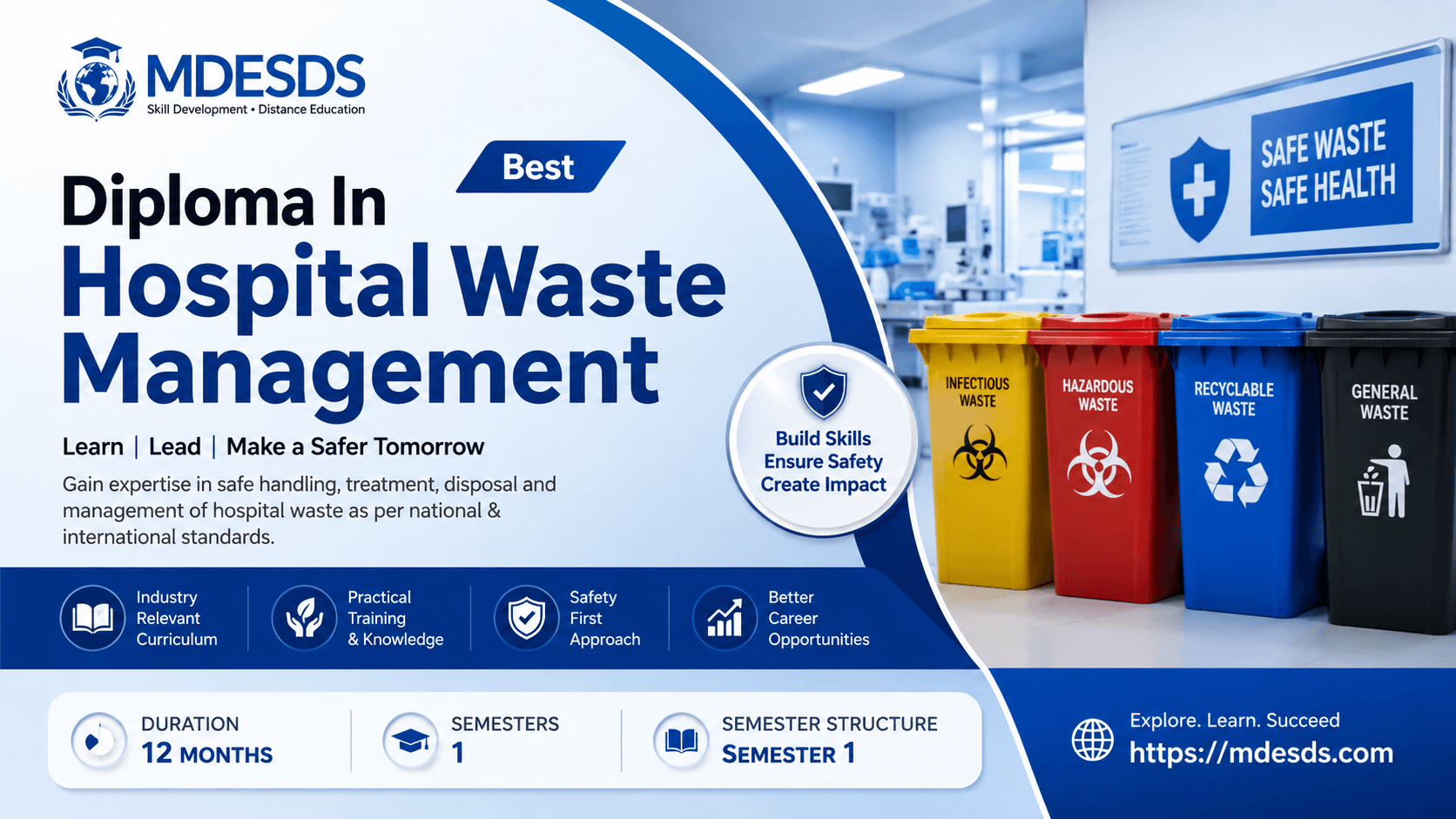
Master bio-medical waste handling with MDESDS's 12-month hybrid Diploma In Hospital Waste Management. Build a rewarding ...

Master modern finance with the Diploma In Computer & Financial Accounting at MDESDS. Gain practical skills in Tally, Ora...