Applications are now open for the Academic Session 2026-27.
Open
Applications are now open for the Academic Session 2026-27.
Applications are now open for the Academic Session 2026-27.
Applications are now open for the Academic Session 2026-27.

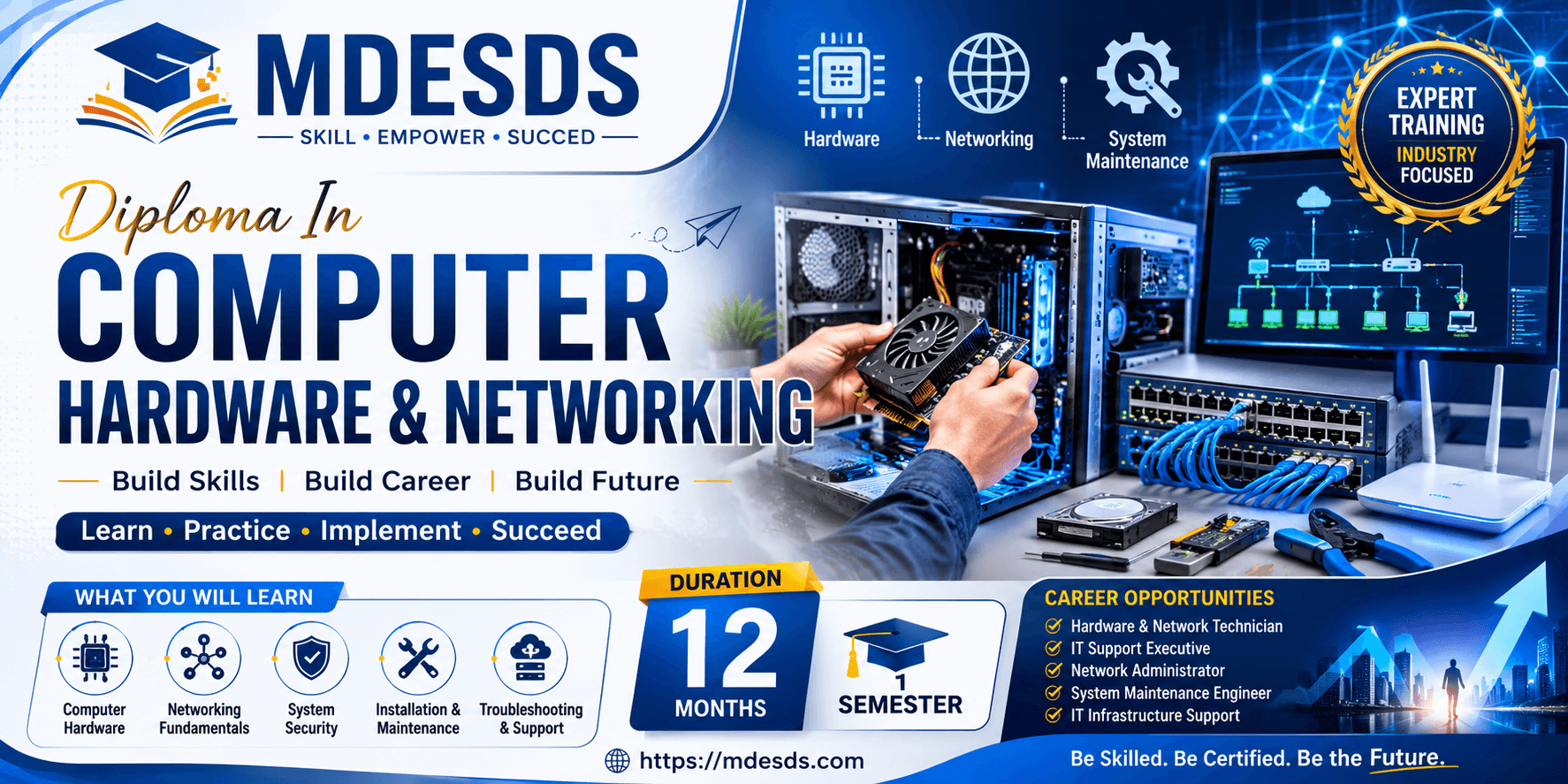
Elevate your IT career with the 12-month Diploma In Computer Hardware & Networking at MDESDS. Learn PC assembly, routing, and network configuration.
In an increasingly connected world, every organization—from local startups to global conglomerates—relies heavily on a robust digital infrastructure. Computers, servers, routers, and local area networks form the nervous system of modern business operations. When a server goes down or a network configuration fails, operations grind to a halt, costing companies millions. This is why the demand for skilled IT infrastructure professionals has skyrocketed.
The Diploma In Computer Hardware & Networking offered by MDESDS is a comprehensive program designed to bridge the gap between theoretical computing and real-world infrastructure management. If you have ever wanted to understand how computers think, how data travels across the globe in milliseconds, or how to secure a corporate network from vulnerabilities, this program provides the definitive roadmap. Delivered over a flexible duration of 12 months, this course transitions you from a standard computer user into an indispensable IT asset.
The Diploma In Computer Hardware & Networking is a specialized professional program that focuses on the physical architecture of computer systems and the logical frameworks that connect them. Unlike traditional software engineering degrees that focus heavily on coding and application development, this diploma dives deep into the tangible components of technology.
At its core, this course teaches you two critical domains:
Computer Hardware: The assembly, maintenance, troubleshooting, and repair of physical components like microprocessors, motherboards, RAM, storage drives, and power supplies.
Computer Networking: The design, implementation, management, and securing of interconnected systems, ensuring seamless data communication across local and wide-area networks.
MDESDS offers this comprehensive curriculum through a flexible hybrid learning mode, combining online theoretical frameworks with intensive, in-person practical lab sessions. This structure ensures you receive the foundational knowledge digitally while mastering the physical, tactile skills required to handle real server racks, crimp cables, and configure live switches.
To ensure industry readiness, the program is structured systematically to build your skills from scratch. Over its 12 months duration, students dive deep into core hardware mechanics and network architectures.
The first phase of the Diploma In Computer Hardware & Networking focuses on establishing an unbreakable foundation in computer anatomy and structural communication.
Before engineering complex networks, you must understand the foundational computing environment. This subject covers the historical evolution of processing units, binary data representation, and the interaction between operating systems and physical chipsets.
Practical Benefits: You will gain the ability to analyze system specifications accurately, optimize operating system performance, and diagnose root-cause system slowdowns.
Skills Gained: Operating system installation, registry optimization, command-line mastery, and basic system administration.
This subject pulls back the curtain on physical computer architecture. Students explore the motherboard, CPU architecture, memory hierarchies (RAM/ROM), storage technologies (SSD/HDD), and power distribution units (SMPS).
Practical Benefits: You will learn how to assemble a high-performance computer from individual components and diagnose physical hardware conflicts or component failures.
Skills Gained: Custom PC assembly, hardware diagnostics, component compatibility testing, BIOS/UEFI configuration, and motherboard troubleshooting.
Data does not travel by magic. This subject introduces the theoretical models that govern global communications, focusing heavily on the OSI model (Open Systems Interconnection) and the TCP/IP suite. You will learn how data packets are formatted, addressed, and transmitted.
Practical Benefits: Gives you the blueprint to map out how data moves through a business environment, allowing you to pinpoint exactly where data loss or latency occurs.
Skills Gained: IP addressing and subnetting, protocol analysis, network topology mapping, and packet sniffing.
A modern network is an ecosystem of specialized hardware. This module explores the functionality, installation, and deployment of hubs, switches, routers, bridges, gateways, and wireless access points.
Practical Benefits: You will understand how to choose the right hardware for specific business needs, avoiding costly over-provisioning or network bottlenecks.
Skills Gained: Device provisioning, hardware mounting, port configuration, and structural cable management.
The culmination of the semester brings theory into reality. This subject focuses on the actual deployment of Local Area Networks (LANs). Students learn how to prepare cables, configure IP addresses, set up file-sharing protocols, and implement basic security measures.
Practical Benefits: You will be fully capable of setting up a functional, secure network for a small-to-medium enterprise from scratch.
Skills Gained: RJ-45 cable crimping, local network configuration, printer sharing setup, firewall baseline configuration, and network connectivity troubleshooting.
The Diploma In Computer Hardware & Networking is built for individuals who prefer hands-on problem-solving over abstract programming. It is ideal for:
High School Graduates: Students looking for a direct, fast-track route into the IT workforce without spending 4 years on a traditional degree.
Aspiring IT Technicians: Individuals wanting a structured, accredited certification to validate their self-taught technical skills.
Career Changers: Professionals working in non-technical roles who want to transition into the stable, high-growth field of IT infrastructure.
Gadget Enthusiasts: Anyone fascinated by hardware mechanics, system building, and understanding the physical infrastructure of the internet.
Investing 12 months in this diploma at MDESDS equips you with a highly competitive edge in the job market:
High Practical Exposure: Thanks to our hybrid learning mode, you don't just read about routers—you configure them. The emphasis is entirely on functional, real-world application.
Rapid Entry to the Job Market: The tech industry faces a constant shortage of field technicians. This course gets you job-ready in exactly one year.
Vendor-Neutral Foundation: The concepts taught map directly to global certifications like CompTIA A+, Network+, and Cisco CCNA, giving you a springboard for future specializations.
Problem-Solving Frameworks: Beyond technical data, you learn systemic troubleshooting models—teaching you how to think through a crisis logically.
Upon successfully completing your Diploma In Computer Hardware & Networking, a wide array of career paths open up across sectors like banking, education, e-commerce, and corporate IT management.
| Job Role | Primary Responsibility |
| Hardware Support Technician | Diagnosing, repairing, and upgrading physical corporate computer systems and peripherals. |
| Network Support Engineer | Monitoring network performance, configuring switches, and troubleshooting connectivity issues. |
| System Administrator | Managing user accounts, local server environments, data backups, and network access control. |
| IT Helpdesk Coordinator | Serving as the first line of defense for corporate technical issues, managing ticket queues and remote resolutions. |
| Field Infrastructure Engineer | Traveling to client sites to deploy hardware architectures, run structural cabling, and set up branch networks. |
The horizon for infrastructure professionals is expanding. With the rise of cloud computing, edge networks, and IoT (Internet of Things), the physical infrastructure hasn't disappeared—it has simply become more complex. Tech professionals who understand hardware and networking are uniquely positioned to transition into Cloud Administration, Cybersecurity operations, and DevOps infrastructure roles down the road.
MDESDS stands out as a premier educational institute committed to delivering high-impact technical training.
Expert Faculty: Learn from industry veterans who have spent years managing real corporate data centers and enterprise environments.
Balanced Hybrid Learning Mode: Enjoy the flexibility of studying theoretical concepts from home while attending rigorous, structured physical labs to master hardware handling.
Structured 12 Months Timeline: Optimized curriculum design ensures no time is wasted; every single week is directly tied to a marketable career skill.
Comprehensive Student Support: From resume-building workshops to mock technical interviews, MDESDS supports you from enrollment to placement.
Don't leave your professional future to chance. Master the physical and digital frameworks that power global business today. Enroll in the Diploma In Computer Hardware & Networking at MDESDS and transform your passion for technology into a rewarding, future-proof career.
The Diploma In Computer Hardware & Networking course is designed to provide practical knowledge, professional skills, and industry-relevant training. With a duration of 12, this program helps students develop the expertise required for academic and professional success.

Master essential digital skills with the MDESDS Certificate In Office Automation Cours. Enroll today to boost your emplo...
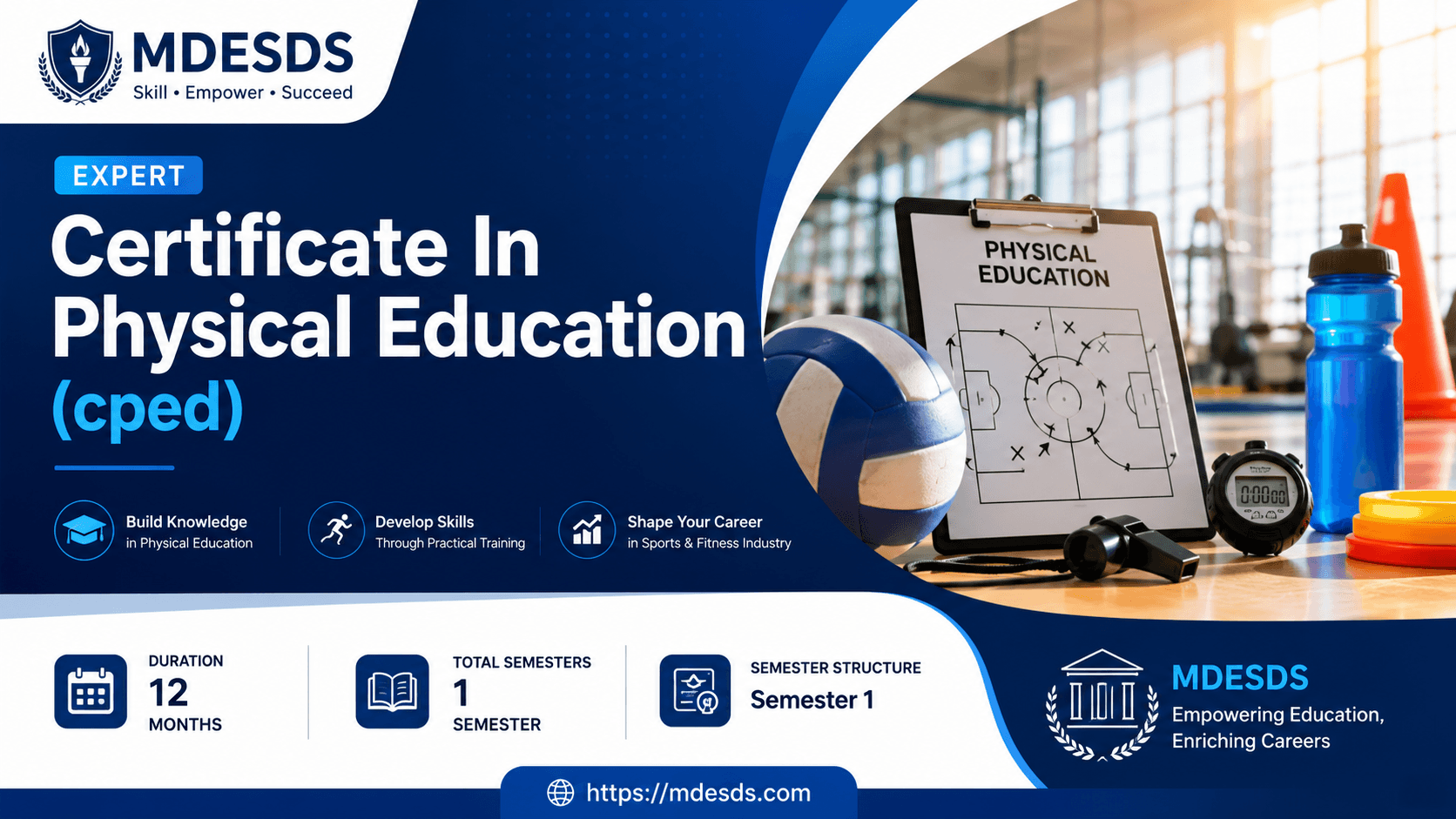
Advance your career with the Certificate In Physical Education (cped) at MDESDS. 12-month hybrid program covering sports...
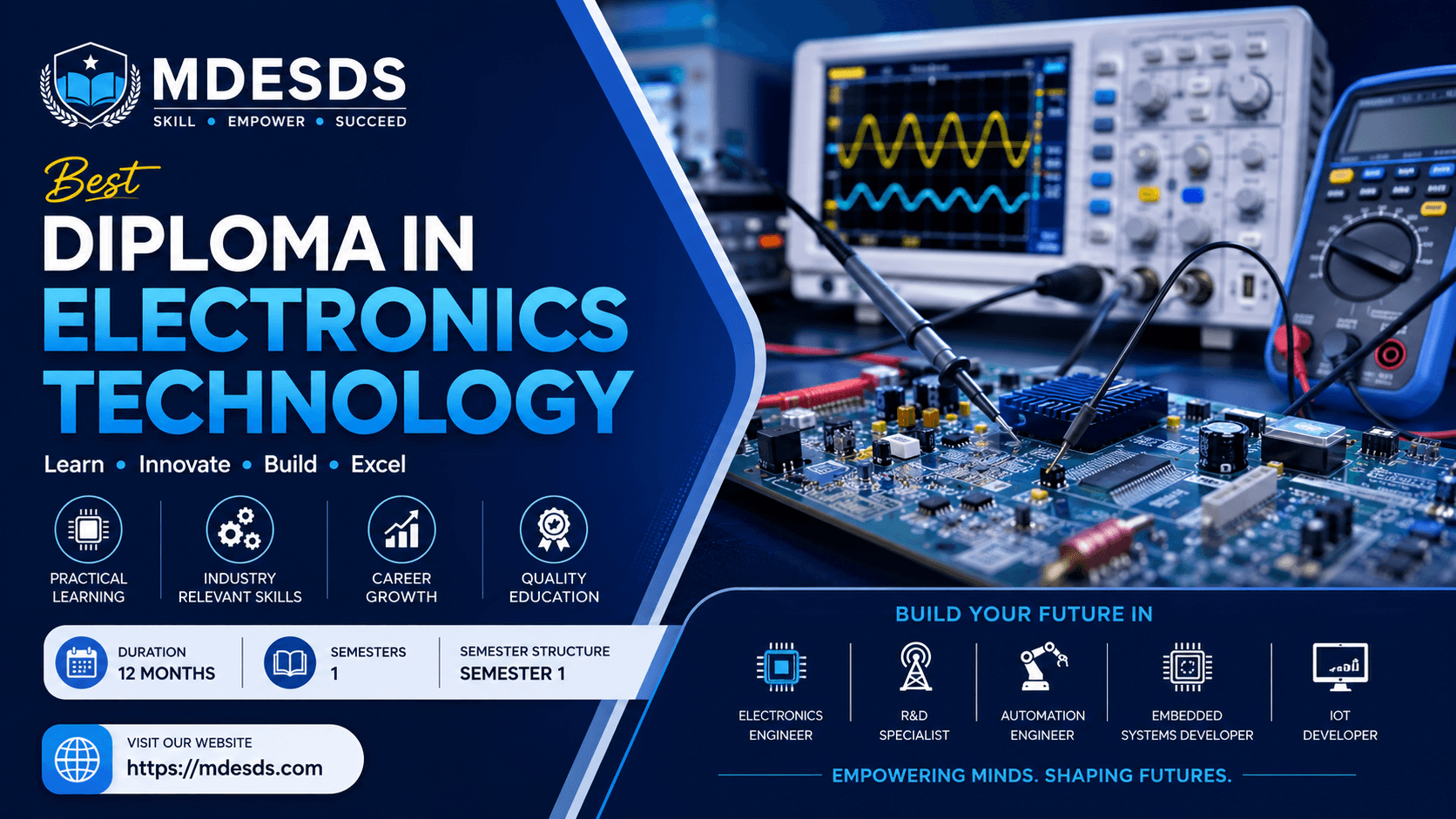
Master core electronics, CAD, and electrical machines with the 12-month hybrid Diploma in Electronics Technology at MDES...