Applications are now open for the Academic Session 2026-27.
Open
Applications are now open for the Academic Session 2026-27.
Applications are now open for the Academic Session 2026-27.
Applications are now open for the Academic Session 2026-27.

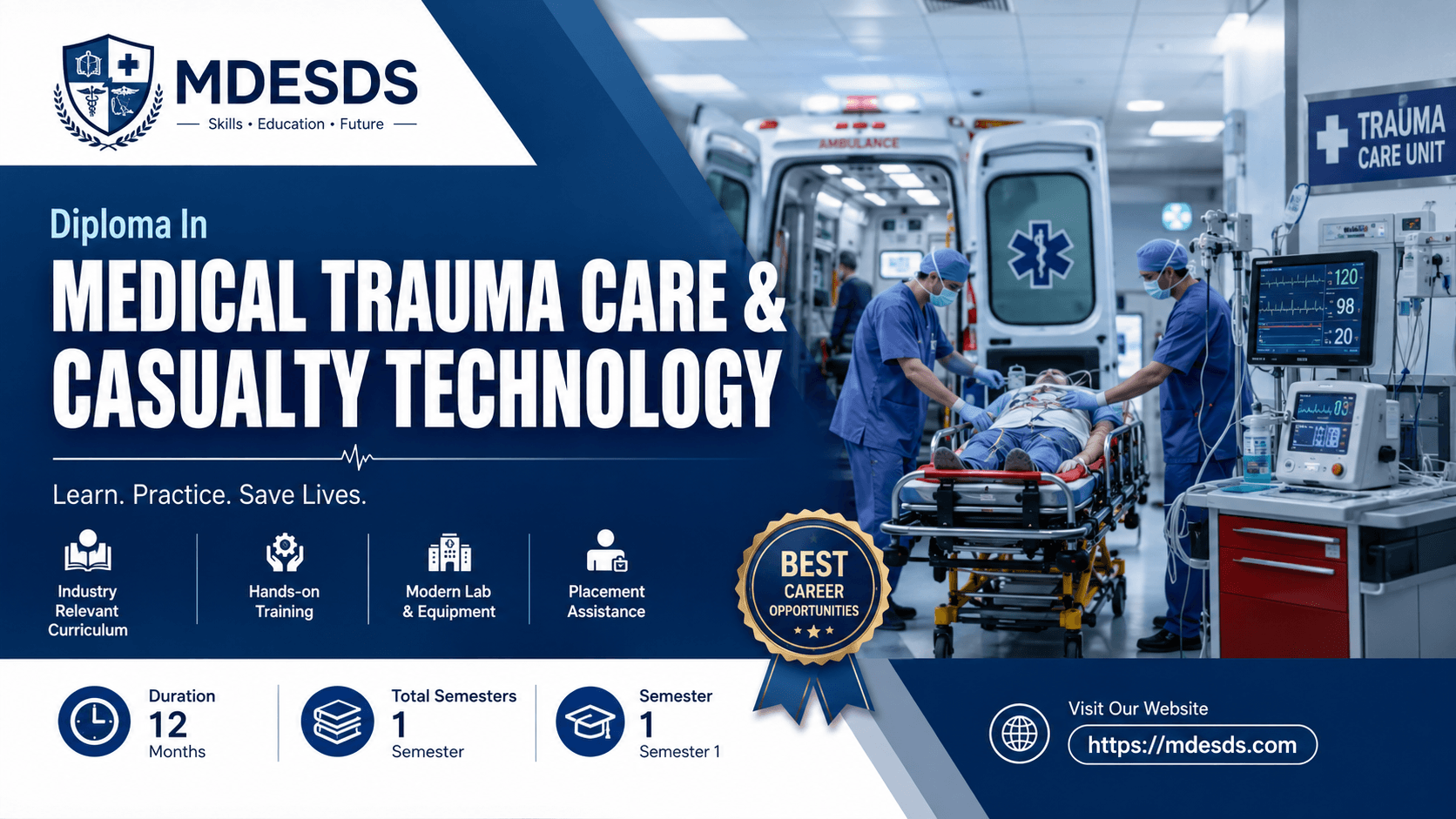
Join MDESDS for a 24-month hybrid Diploma In Medical Trauma Care & Casualty Technology. Gain hands-on skills in emergency medicine and trauma management.
In the golden hour of medical emergencies, the presence of a skilled professional can mean the absolute difference between life and death. When accidents, natural disasters, or sudden critical illnesses strike, emergency rooms and casualty departments become high-stakes environments. The demand for trained, quick-thinking emergency medical technicians and trauma care specialists has never been higher.
To bridge this critical gap in healthcare infrastructure, the Millennium Development and Education Society (MDESDS) offers a comprehensive Diploma In Medical Trauma Care & Casualty Technology. This specialized professional program prepares individuals to function effectively under pressure, manage emergency situations, and provide immediate, life-saving care to patients in critical conditions.
The Diploma In Medical Trauma Care & Casualty Technology is a highly specialized paramedical program designed to train students in the core aspects of emergency medical services, disaster management, acute patient care, and trauma management.
Trauma care and casualty technology involve the immediate assessment, stabilization, and treatment of patients suffering from severe, life-threatening injuries or sudden illnesses. This 24-month program combines rigid theoretical knowledge with immersive practical training. Offered via a flexible hybrid learning mode, the course allows aspiring healthcare professionals to balance their academic education with foundational clinical rotations, ensuring they are job-ready from day one.
The Diploma In Medical Trauma Care & Casualty Technology is structured systematically across two comprehensive semesters spanning a total duration of 24 months. By utilizing a hybrid learning mode, students engage with interactive digital lectures alongside mandatory, intensive on-campus practical sessions.
The first semester focuses on building a rock-solid foundation in human biology, clinical communication, and basic computing tools required in modern digital hospitals.
Communicative English and Computer Fundamentals
Practical Benefits: Effective communication minimizes errors during critical handovers in high-stress emergency rooms. Computer literacy ensures students can effortlessly operate Hospital Information Systems (HIS) and digital patient tracking software.
Skills Gained: Clear verbal de-escalation, precise medical charting, efficient entry of electronic health records (EHR), and professional clinical reporting.
Anatomy & Physiology - 1
Practical Benefits: Knowing the exact structure and function of the human body allows trauma technicians to quickly locate injury sites, understand referred pain, and anticipate internal bleeding pathways.
Skills Gained: Identification of musculoskeletal structures, understanding cardiovascular pathways, mapping nervous system responses, and assessing vital organ functions.
Trauma Care Management - 1
Practical Benefits: Teaches the absolute basics of triage (prioritizing patients based on severity) and basic life support protocol during accidents or mass casualties.
Skills Gained: Performing Cardiopulmonary Resuscitation (CPR), immobilization of fractured limbs, bleeding control techniques, and safe patient transfer methods.
Practical - 1
Practical Benefits: Translates textbook knowledge into real-world muscle memory within controlled laboratory settings before entering real casualty wards.
Skills Gained: Setting up basic IV lines, splinting, applying specialized bandages, and utilizing automated external defibrillators (AED).
The second semester advances into complex medical emergencies, specialized surgical assist techniques, and independent decision-making during crisis management.
Anatomy & Physiology - 2
Practical Benefits: Delves deeper into advanced physiological responses to trauma, such as shock, respiratory failure, and systemic inflammatory responses.
Skills Gained: Recognizing signs of hypovolemic shock, monitoring intracranial pressure indicators, and managing metabolic imbalances caused by severe burns or trauma.
Trauma Care Management - 2
Practical Benefits: Focuses on advanced airway management, handling polytrauma (multiple severe injuries), and coordinating disaster management responses.
Skills Gained: Intubation assistance, managing mechanical ventilators, setting up emergency chest tubes, and executing disaster triage protocols.
Practical - 2
Practical Benefits: Intensive clinical drills matching high-velocity emergency room scenarios. This ensures students can operate advanced life-support machinery without hesitation.
Skills Gained: Operating multi-channel patient monitors, administering emergency medications under direct supervision, setting up emergency tracheostomy kits, and mastering advanced suturing assistance.
The Diploma In Medical Trauma Care & Casualty Technology is perfectly tailored for:
Aspiring Healthcare Workers: Students who have completed their 10+2 education (preferably with a science background) and want to enter the medical field quickly without spending 4 to 5 years in a traditional degree.
Action-Oriented Individuals: People who thrive in fast-paced environments, possess strong emotional resilience, and want a career where they can see the direct life-saving impact of their daily work.
Working Professionals Seeking Upskilling: Nursing assistants or basic ambulance drivers looking to achieve a formal, recognized diploma qualification to accelerate their career growth through our convenient hybrid learning mode.
Investing your time in this 24-month professional diploma opens doors to numerous benefits:
Accelerated Pathway to Healthcare: Enter the medical workforce in just two years with a highly respected, in-demand technical skill set.
Flexible Hybrid Learning Mode: MDESDS provides a perfect balance of online academic flexibility and critical, hands-on hospital training.
High Job Security: Emergency services are recession-proof. Hospitals, trauma centres, and ambulance networks require skilled casualty technicians every single hour of the day.
Deep Personal Satisfaction: Few careers offer the profound sense of fulfillment that comes from pulling a critical patient back from the brink of danger.
Graduates of the Diploma In Medical Trauma Care & Casualty Technology enjoy diverse employment avenues across the public and private healthcare sectors.
Trauma Care Technician: Working directly in hospital emergency rooms and trauma bays to stabilize incoming critical patients.
Casualty Medical Assistant: Managing patient flow, prioritizing admissions, and assisting emergency doctors during night shifts and crisis situations.
Ambulance Emergency Medical Technician (EMT): Providing pre-hospital care inside high-tech life-support ambulances during transit.
Disaster Management Coordinator: Helping NGOs, industrial plants, or government bodies design and execute emergency rescue operations.
The scope of trauma care technology is expanding rapidly as corporate hospital chains and state governments set up dedicated trauma networks along major highways. After completing this 24-month diploma, ambitious students can pursue a Bachelor’s degree via lateral entry or opt for specialized certifications in intensive care unit (ICU) management, neonatal resuscitation, or advanced cardiac life support (ACLS), drastically increasing their earning potential.
The Millennium Development and Education Society (MDESDS) stands out as a premier destination for paramedical and technical training.
Industry-Aligned Curriculum: Our course syllabus is continuously updated alongside leading emergency medical practitioners to reflect the latest life-saving protocols.
Expert Faculty: Learn from seasoned emergency physicians, trauma surgeons, and veteran nursing educators who bring real-world casualty experiences directly into the classroom.
State-of-the-Art Practical Labs: Gain confidence using realistic medical simulators, advanced ventilators, and diagnostic equipment identical to those found in top-tier corporate hospitals.
Robust Placement Assistance: Our deep network of partner hospitals and healthcare organizations ensures our students transition smoothly from graduation into stable, high-paying jobs.
Are you ready to turn your passion for helping others into an exciting, fast-paced professional career? Don't wait to make your mark on the healthcare ecosystem. Admissions are open for our upcoming batch.
The Diploma In Medical Trauma Care & Casualty Technology course is designed to provide practical knowledge, professional skills, and industry-relevant training. With a duration of 24, this program helps students develop the expertise required for academic and professional success.

Master digital business with our 12-month Diploma In Internet Application & Ecommerce at MDESDS. Enroll today to build y...
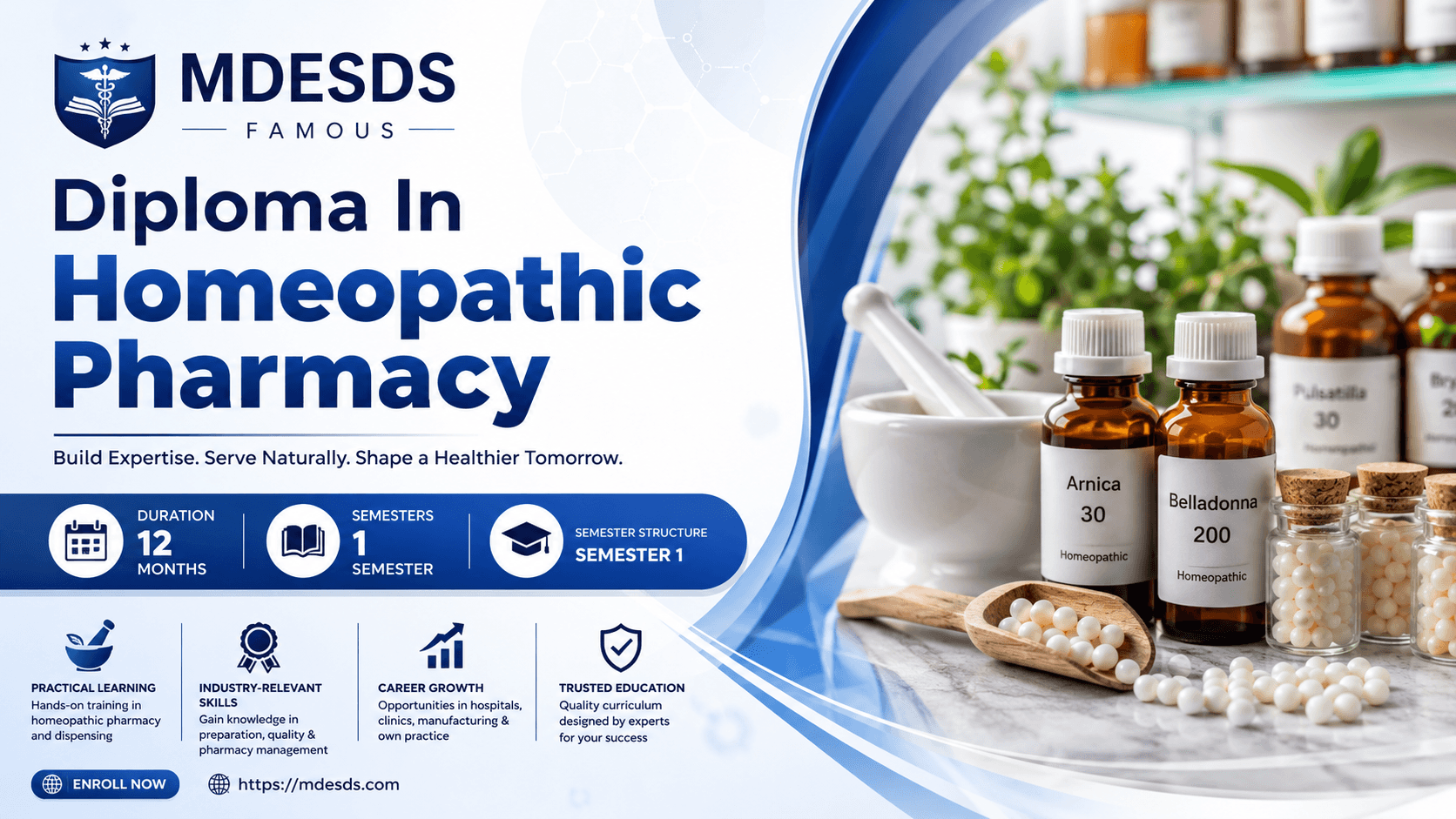
Enroll in MDESDS’s 12-month Diploma In Homeopathic Pharmacy. Master clinical skills, pharmacy operations, and patient ca...
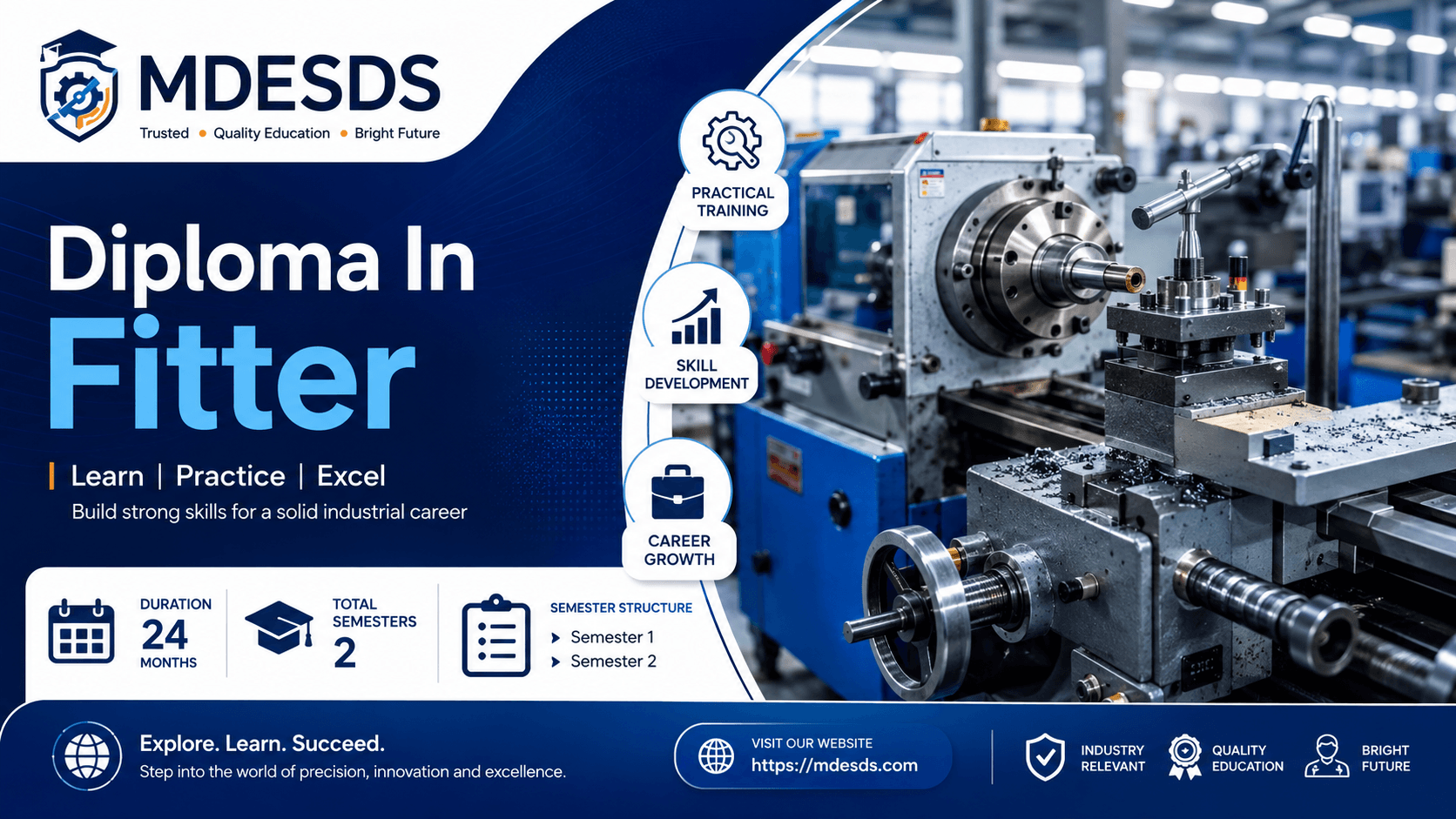
Master industrial precision with our 24-month Diploma In Fitter at MDESDS. Gain hands-on skills, safety training, and ca...