Applications are now open for the Academic Session 2026-27.
Open
Applications are now open for the Academic Session 2026-27.
Applications are now open for the Academic Session 2026-27.
Applications are now open for the Academic Session 2026-27.

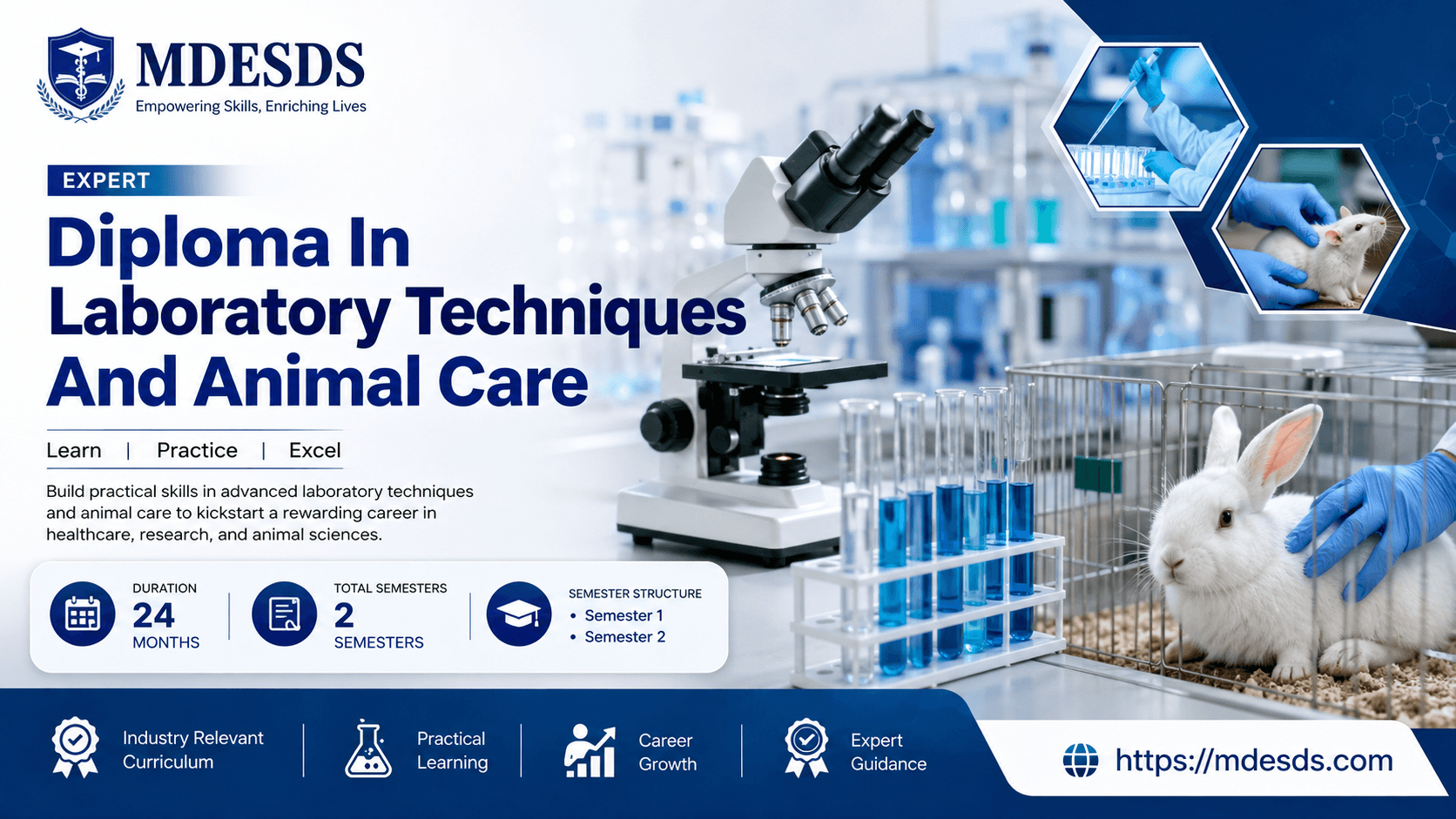
Master lab safety, chemistry basics, and animal management with MDESDS's 12-month hybrid Diploma In Laboratory Techniques And Animal Care. Apply today!
Behind every medical breakthrough, high-tech chemical analysis, and ethical wildlife study is a team of skilled laboratory professionals. Modern science relies heavily on precise data, sterile environments, and the compassionate, ethical handling of laboratory animals. As research facilities, diagnostic labs, and pharmaceutical companies expand globally, the demand for trained technicians who understand both technical laboratory workflows and specialized animal care has skyrocketed.
The Diploma In Laboratory Techniques And Animal Care is designed to bridge the gap between core scientific methodology and practical, hands-on lab execution. This program does not just teach theory; it shapes professionals who can walk into any professional laboratory environment and immediately contribute to safety, efficiency, and accurate data collection. Whether you are aiming to work in a cutting-edge biotech firm, a university research department, or a critical diagnostic center, this qualification serves as your entry ticket to a rewarding, resilient scientific career.
The Diploma In Laboratory Techniques And Animal Care is a comprehensive, specialized training program that equips students with the foundational skills required to manage laboratory environments, conduct essential chemical experiments, and handle administrative and safety protocols. The curriculum is uniquely structured to balance technical chemical sciences with the organizational management required to run complex laboratory ecosystems.
Offered by MDESDS, this program stands out due to its modern approach to education. Recognizing the needs of working professionals and students seeking flexibility, the course is delivered via a highly effective hybrid learning mode. This means you get the best of both worlds: flexible, self-paced theoretical learning paired with essential practical insights. Spanning a total course duration of 12 months, this one-year diploma packs intense, career-oriented training into a streamlined timeline, allowing you to enter the workforce quickly without compromising on the depth of your education.
The academic architecture of the Diploma In Laboratory Techniques And Animal Care at MDESDS is meticulously planned. The program is concentrated into an intensive Semester 1 structure, maximizing your learning efficiency over the 12-month duration.
Below is the detailed breakdown of the curriculum, including the practical benefits of each subject and the specific professional skills you will develop.
Good Laboratory Practices form the baseline of all credible scientific research. This subject introduces students to the international regulatory standards that govern how laboratory studies are planned, performed, monitored, recorded, archived, and reported.
Practical Benefits: You will learn how to maintain flawless data integrity, minimize human error, and ensure that all laboratory results meet international quality compliance standards. This knowledge prevents costly experimental reruns and maintains the credibility of the research facility.
Skills Gained: Auditing logs, standardization protocols, rigorous data documentation, quality assurance tracking, and regulatory compliance mapping.
A laboratory is more than just test tubes; it is a complex operational business environment. This first phase of management training focuses on the internal structure of labs, inventory tracking, and the procurement of delicate scientific machinery.
Practical Benefits: You will understand how to optimize standard workflows, manage vendor relationships, prevent resource wastage, and keep a laboratory financially and operationally sound.
Skills Gained: Supply chain and inventory management, equipment tracking, resource allocation, and basic laboratory budgeting.
Building directly upon the first phase, this advanced management module delves into human resource management within a scientific setting, data filing systems, team communication, and standard operating procedure (SOP) development.
Practical Benefits: You will gain the capability to supervise junior staff, design clear, readable SOPs for complex machinery, and ensure smooth inter-departmental data transfer.
Skills Gained: SOP drafting, team leadership, conflict resolution in technical settings, advanced digital archiving, and workload scheduling.
Safety is the absolute priority in any scientific environment. This critical module covers the classification of chemical, biological, and physical hazards, explosive materials, radiation safety, and immediate emergency response protocols.
Practical Benefits: You will develop a proactive eye for identifying risks before they cause accidents. You will learn exactly how to handle toxic spills, manage bio-hazardous waste disposal safely, and protect both yourself and your colleagues from injury.
Skills Gained: Emergency protocol execution, chemical spill containment, correct Personal Protective Equipment (PPE) utilization, bio-waste segregation, and hazard risk assessment.
This foundational scientific module puts theory into motion. Students dive into fundamental chemical reactions, titration methods, solution preparations, pH balancing, and the proper calibration of standard chemical apparatus.
Practical Benefits: You will develop the precise physical hand-eye coordination and measurement skills required to prepare chemical reagents accurately, eliminating contamination risks in experiments.
Skills Gained: Solution molarity calculations, analytical balance calibration, titration execution, safety-first chemical mixing, and pH meter operation.
The Diploma In Laboratory Techniques And Animal Care is designed for a diverse pool of aspiring professionals. You do not need an advanced engineering or doctoral background to start. This program is ideal for:
High School Graduates (Science Stream): Young students looking to secure a practical, high-employment qualification right after school instead of pursuing overly long theoretical degrees.
Aspiring Research Assistants: Individuals who want a structured pathway into academic, medical, or industrial research institutions.
Animal Welfare Advocates & Vet Assistants: People passionate about the ethical care, housing, and handling of animals within scientific and diagnostic frameworks.
Career Switchers: Professionals working in general administrative roles who want to transition into the stable, high-growth healthcare and biotech sectors.
Enrolling in the Diploma In Laboratory Techniques And Animal Care offers distinct professional and personal advantages:
Rapid Career Entry: With a focused course duration of 12 months, you save years of tuition costs and enter the active job market much faster than traditional degree holders.
Flexible Hybrid Learning: The hybrid learning mode ensures that your current job, family responsibilities, or geographical location won't stand in the way of your education. You can study theory from comfort, balancing your lifestyle seamlessly.
Dual Expertise Profile: Most courses teach either basic lab work or animal handling. This diploma blends both, making your resume twice as attractive to specialized research facilities that utilize animal models for medical studies.
Impeccable Safety Credentials: Industry employers highly value candidates who do not need basic safety training. Your deep knowledge of hazards and Good Laboratory Practices makes you a low-risk, high-value hire from day one.
The career scope after finishing your Diploma In Laboratory Techniques And Animal Care is vast and spans across multiple high-paying industries. As global investments in healthcare, pharmaceutical development, and environmental safety grow, your skills will remain in steady demand.
Laboratory Assistant / Technician: Managing day-to-day operations, preparing chemical reagents, and maintaining equipment in diagnostic or academic labs.
Quality Control Analyst: Ensuring manufacturing plants, food processing units, and chemical labs strictly follow Good Laboratory Practices.
Animal Care Supervisor: Overseeing the ethical housing, dietary needs, health tracking, and comfort of animals within certified research centers.
Laboratory Safety Officer: Designing risk-mitigation strategies, supervising hazardous waste disposal, and conducting regular safety audits.
Research Facility Coordinator: Handling the inventory, documentation, and administrative scheduling of busy scientific research departments.
This diploma serves as an excellent foundation. Professionals can easily transition later into advanced degrees in biochemistry, laboratory medicine, or veterinary management. With experience, you can move up from entry-level technician roles to regional laboratory manager or compliance auditor positions.
When it comes to specialized technical training, the institution you choose matters immensely to employers. MDESDS is a pioneer in vocational and professional scientific education.
Industry-Aligned Curriculum: Our course material is continuously updated to reflect real-world lab standards, ensuring you don't learn outdated methodologies.
Expert Faculty Support: Learn from seasoned laboratory managers and education experts who offer valuable industry insights, mentorship, and career guidance.
Student-Centric Hybrid Delivery: Our digital learning infrastructure is stable, smooth, and highly interactive, providing a top-tier educational experience over the entire 12-month course duration.
Credibility & Recognition: A certificate from MDESDS signals to recruiters that you have undergone rigorous, structured, and ethical training.
Are you ready to build a reliable, meaningful career in the thriving world of scientific research and laboratory management? Do not leave your professional future to chance. Get the right training, master in-demand technical skills, and stand out to top employers with MDESDS.
The Diploma In Laboratory Techniques And Animal Care course is designed to provide practical knowledge, professional skills, and industry-relevant training. With a duration of 12, this program helps students develop the expertise required for academic and professional success.

Master the digital age with our expert Course Computer Concepts. Gain hands-on skills in programming, hardware, and soft...
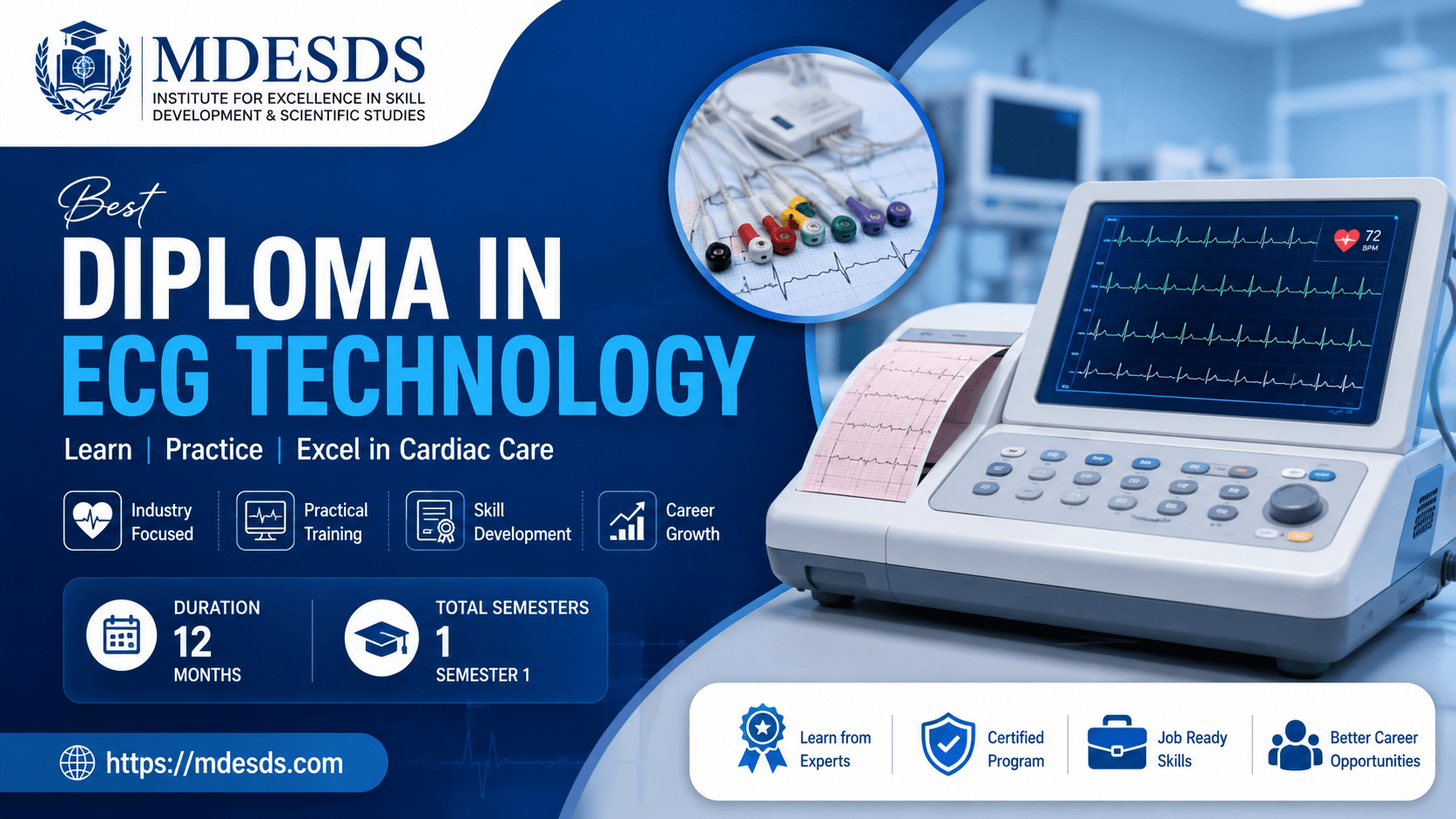
Advance your medical career with our comprehensive Diploma In Ecg Technology. Gain hands-on expertise through hybrid lea...
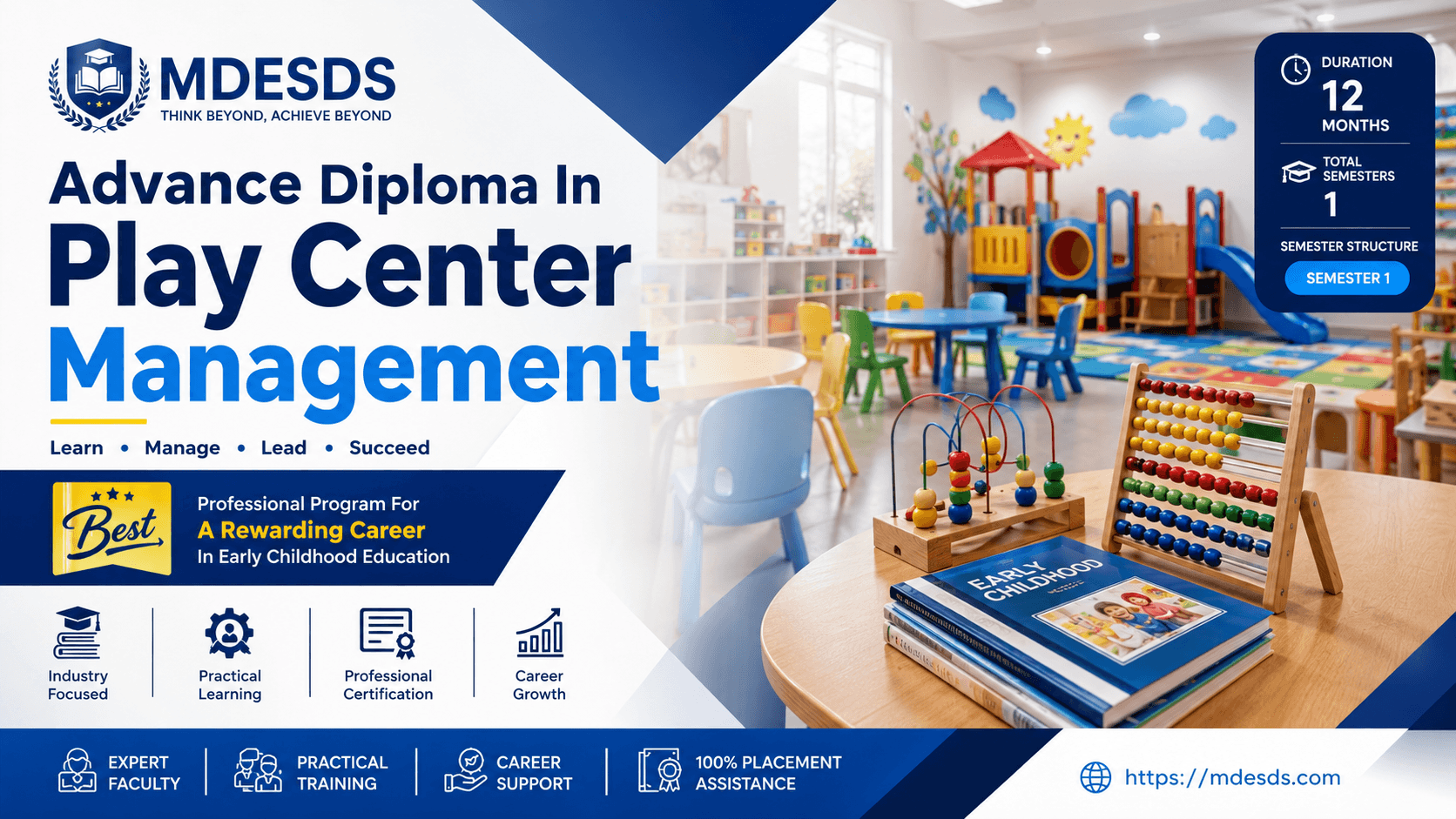
Earn an Advance Diploma In Play Center Management from MDESDS. 12-month hybrid course covering child care, development, ...