Search Our Courses



No matching course found.
No matching course found.

DIPLOMA IN HOTEL MANAGEMENT
The hospitality industry is one of the most dynamic and people-oriented sectors in the world. Hotels, resorts, restaurants, travel businesses, event companies, clubs, cruise operations, and other hospitality establishments require trained professionals who understand both customer service and the operational side of the industry. For students who want to build a practical career in this field, a DIPLOMA IN HOTEL MANAGEMENT can provide a strong foundation in hospitality operations, guest relations, food service, housekeeping, front-office functions, and professional workplace skills.
The DIPLOMA IN HOTEL MANAGEMENT offered by MDESDS is designed for learners who want to understand the fundamentals of hotel and hospitality management while developing skills that can be applied in real workplace environments. The course focuses on the practical and professional aspects of hospitality, helping learners develop confidence, communication abilities, service awareness, and operational knowledge.
Hotel management is not limited to working at a reception desk. It involves coordinating people, maintaining service standards, managing guest expectations, supporting food and beverage operations, understanding housekeeping procedures, handling reservations, and contributing to the smooth functioning of hospitality businesses. A well-structured DIPLOMA IN HOTEL MANAGEMENT can therefore be a valuable starting point for learners seeking opportunities in a broad and growing sector.
A DIPLOMA IN HOTEL MANAGEMENT is a career-oriented program that introduces learners to the key functions involved in hotel and hospitality operations. It combines management concepts with practical knowledge of different hotel departments.
The course helps learners understand how a hotel operates from the guest's perspective as well as from the operational and managerial perspective. Students can develop knowledge of areas such as front office operations, housekeeping, food production, food and beverage service, hospitality communication, customer care, hotel administration, and basic business management.
The program is particularly useful for individuals who enjoy interacting with people, working in service-oriented environments, solving customer problems, organizing activities, and maintaining professional standards.
By completing a DIPLOMA IN HOTEL MANAGEMENT, learners can build foundational knowledge that may support entry-level employment, further education, entrepreneurship, or specialization within the hospitality industry.
Course Name: DIPLOMA IN HOTEL MANAGEMENT
Offered By: MDESDS
Course Duration: The duration has not been specified in the supplied course details. Learners should confirm the current duration with MDESDS before enrollment.
Learning Mode: The learning mode has not been specified in the supplied course details. Please confirm the available learning format with MDESDS.
Total Semesters: The total number of semesters has not been specified in the supplied course details.
Because the official semester-wise subject information was not included in the supplied course data, the curriculum below presents the key academic and practical areas that a DIPLOMA IN HOTEL MANAGEMENT program should cover without assigning unverified subjects or semester numbers.
A strong hotel management curriculum should develop both operational competence and professional behavior. The following areas represent the major learning components relevant to a career in hospitality.
Front office is one of the most visible departments in a hotel because it directly interacts with guests throughout their stay. Learners study the fundamentals of reservations, check-in and check-out procedures, guest registration, room allocation, billing coordination, and basic front-office communication.
The practical benefit of this subject is that learners understand how to create an organized and professional guest experience. They can develop skills in customer interaction, documentation, problem-solving, telephone etiquette, and handling routine guest requests.
Housekeeping plays an essential role in maintaining cleanliness, comfort, hygiene, and the overall appearance of a hotel. This area introduces learners to housekeeping procedures, room preparation, cleaning standards, linen management, coordination with other departments, and workplace organization.
Learning housekeeping management helps students appreciate the operational standards required to maintain guest satisfaction. It also develops attention to detail, time management, team coordination, and service-quality awareness.
Food production introduces learners to the fundamentals of kitchen operations and food preparation. Depending on the curriculum, this area may cover basic culinary techniques, kitchen organization, food safety, hygiene, ingredients, cooking methods, and professional kitchen practices.
The practical value is significant for learners interested in hotels, restaurants, catering businesses, resorts, and food service operations. Students can develop basic kitchen discipline, safety awareness, teamwork, and an understanding of food quality.
Food and beverage service focuses on how restaurants, dining areas, banquets, and other food-service operations serve customers professionally. Learners can become familiar with service procedures, table setup, guest interaction, order handling, service etiquette, and coordination between service and kitchen teams.
This subject develops interpersonal skills, presentation, communication, accuracy, and the ability to work effectively in fast-paced service environments.
Hospitality management provides a broader understanding of how hospitality organizations operate. Learners explore the importance of service quality, guest satisfaction, departmental coordination, employee responsibilities, and operational efficiency.
The practical benefit is that students begin to understand hospitality as an integrated business rather than a collection of separate departments. This knowledge can support future progression toward supervisory and managerial responsibilities.
Effective communication is fundamental to hotel management. This area develops professional speaking, listening, interpersonal communication, customer handling, telephone etiquette, workplace behavior, and service communication.
These skills are useful across virtually every hospitality role. A learner who can communicate clearly, remain professional under pressure, understand customer needs, and respond appropriately to complaints has a valuable advantage in the hospitality workplace.
Hotels involve continuous financial transactions, including room charges, food and beverage sales, purchasing, payroll, billing, and operational expenses. Basic accounting knowledge helps learners understand the financial side of hospitality operations.
Students can develop awareness of billing procedures, revenue, costs, records, and financial responsibility. Such knowledge is particularly useful for learners who eventually want to move into supervisory or administrative positions.
Marketing helps hospitality businesses attract guests and build a recognizable service brand. Learners can gain an introduction to promotional activities, customer expectations, sales concepts, online visibility, and the importance of service reputation.
The practical benefit is an understanding of how guest experience, marketing, communication, and business growth are connected.
Food safety and hygiene are critical in hospitality. Learners need to understand the importance of personal hygiene, safe food handling, cleanliness, sanitation, and responsible workplace practices.
This knowledge helps future hospitality professionals contribute to safer and more professional hotel and food-service environments.
Hotels frequently host conferences, weddings, meetings, parties, exhibitions, and other events. Event and banquet operations introduce learners to the organization and service requirements of these activities.
Students can develop planning, coordination, teamwork, communication, and time-management skills that are useful not only in hotels but also in event-management and catering environments.
The DIPLOMA IN HOTEL MANAGEMENT is suitable for students and aspiring professionals who want to establish themselves in hospitality and service-related careers.
It can be considered by:
Students interested in hotels, resorts, restaurants, and hospitality.
Individuals seeking a career-oriented qualification in hotel management.
Learners who enjoy interacting with customers and working with people.
Individuals interested in food and beverage operations.
Aspiring professionals who want to work in front office or guest services.
People interested in housekeeping and hotel operations.
Entrepreneurs considering a future business in hospitality, catering, or related services.
Working individuals who want to strengthen their foundational hospitality knowledge.
Eligibility requirements can vary according to the institute, course structure, and admission policy. Prospective learners should therefore confirm the current eligibility criteria directly with MDESDS before admission.
Choosing a DIPLOMA IN HOTEL MANAGEMENT can offer several professional and personal advantages.
The course introduces learners to the major departments and functions within hospitality organizations, helping them understand how different teams work together.
Hospitality is fundamentally about people. Learners develop communication, listening, service, and guest-handling abilities that can be useful across multiple industries.
Exposure to hotel operations, workplace procedures, communication, and service standards can help learners become more confident in professional environments.
Hospitality offers opportunities across hotels, resorts, restaurants, catering companies, event businesses, clubs, guest houses, and related service organizations.
An entry-level role can become the beginning of a longer professional journey. With experience, additional training, and strong performance, hospitality professionals may progress toward supervisory and managerial positions.
Knowledge of hospitality operations can also benefit individuals interested in starting businesses such as catering services, small accommodation facilities, food-service ventures, or event-related operations.
After completing a DIPLOMA IN HOTEL MANAGEMENT, learners can explore entry-level and support-level positions in different hospitality departments. Depending on qualifications, practical experience, employer requirements, and individual skills, possible career paths may include:
Front Office Executive
Guest Service Executive
Receptionist
Reservation Executive
Housekeeping Executive or Assistant
Food and Beverage Service Executive
Restaurant Service Associate
Kitchen Assistant or Commis-level roles
Banquet Service Executive
Hospitality Operations Assistant
Customer Service Executive
Hotel Administration Assistant
Catering Operations Assistant
Event Service Assistant
With experience and further professional development, learners can work toward supervisory and management-oriented roles. The scope of hotel management can also extend into tourism, travel services, event management, restaurant operations, catering, cruise hospitality, and other customer-focused industries.
The scope of hotel management extends beyond traditional hotels. Modern hospitality includes resorts, serviced accommodation, restaurants, cafés, banquet facilities, event venues, corporate hospitality, travel-related services, and specialized guest-service businesses.
The industry also increasingly values professionals who can combine traditional hospitality knowledge with digital awareness, communication skills, customer relationship management, and operational discipline.
For long-term career development, learners can strengthen their profile through additional certifications, specialized training, work experience, language skills, technology knowledge, and leadership development. Those who consistently demonstrate professionalism, reliability, guest-service ability, and operational competence can create opportunities for career progression.
Choosing the right education provider is an important part of career planning. MDESDS offers learners an opportunity to pursue career-focused education with an emphasis on practical knowledge and professional development.
A DIPLOMA IN HOTEL MANAGEMENT from MDESDS can be considered by learners looking for structured exposure to the core areas of hotel and hospitality operations.
Key reasons to consider MDESDS include:
Career-oriented course content.
Focus on essential hospitality concepts and workplace skills.
Learning designed to support professional development.
Coverage of major hotel management functions.
Suitable foundation for learners interested in hospitality careers.
Opportunity to build knowledge that can complement practical industry experience.
Before enrolling, students are encouraged to verify the latest course duration, learning mode, semester structure, eligibility requirements, assessment process, certification details, and admission conditions directly with MDESDS.
A DIPLOMA IN HOTEL MANAGEMENT is a career-oriented program that introduces learners to hotel and hospitality operations, including front office, housekeeping, food production, food and beverage service, customer service, and basic management concepts.
Graduates can explore opportunities in front office, guest services, reservations, housekeeping, food and beverage service, catering, banquet operations, hotel administration, and other hospitality-related functions. Career progression generally depends on experience, performance, skills, and additional qualifications.
The program can be suitable for students, aspiring hospitality professionals, and individuals interested in hotel operations, customer service, food service, tourism, and related fields. Specific eligibility requirements should be confirmed with MDESDS.
Learners can develop communication, customer-service, teamwork, problem-solving, time management, operational awareness, professional etiquette, service-quality awareness, and basic hospitality management skills.
The supplied course information does not specify the course duration, learning mode, or total number of semesters. Students should contact MDESDS to confirm the current program structure before admission.
A successful hospitality career begins with the right combination of knowledge, professional behavior, practical skills, and a willingness to serve people. The DIPLOMA IN HOTEL MANAGEMENT can provide a structured foundation for learners who want to enter the hotel and hospitality sector and develop their careers across different service environments.
If you are looking for a career-focused DIPLOMA IN HOTEL MANAGEMENT and want to learn more about admission, eligibility, course duration, learning mode, syllabus, and certification, connect with MDESDS today.
Call MDESDS: +91 7015154649
Visit the official website: MDESDS
Trusted DIPLOMA IN HOTEL MANAGEMENT Course
Build practical hotel management skills with MDESDS. Learn hospitality operations, guest service, food service and career-ready skills for the hospitality industry.
The Diploma In Hotel Management course is designed to provide practical knowledge, professional skills, and industry-relevant training. With a duration of 24 Months, this program helps students develop the expertise required for academic and professional success.
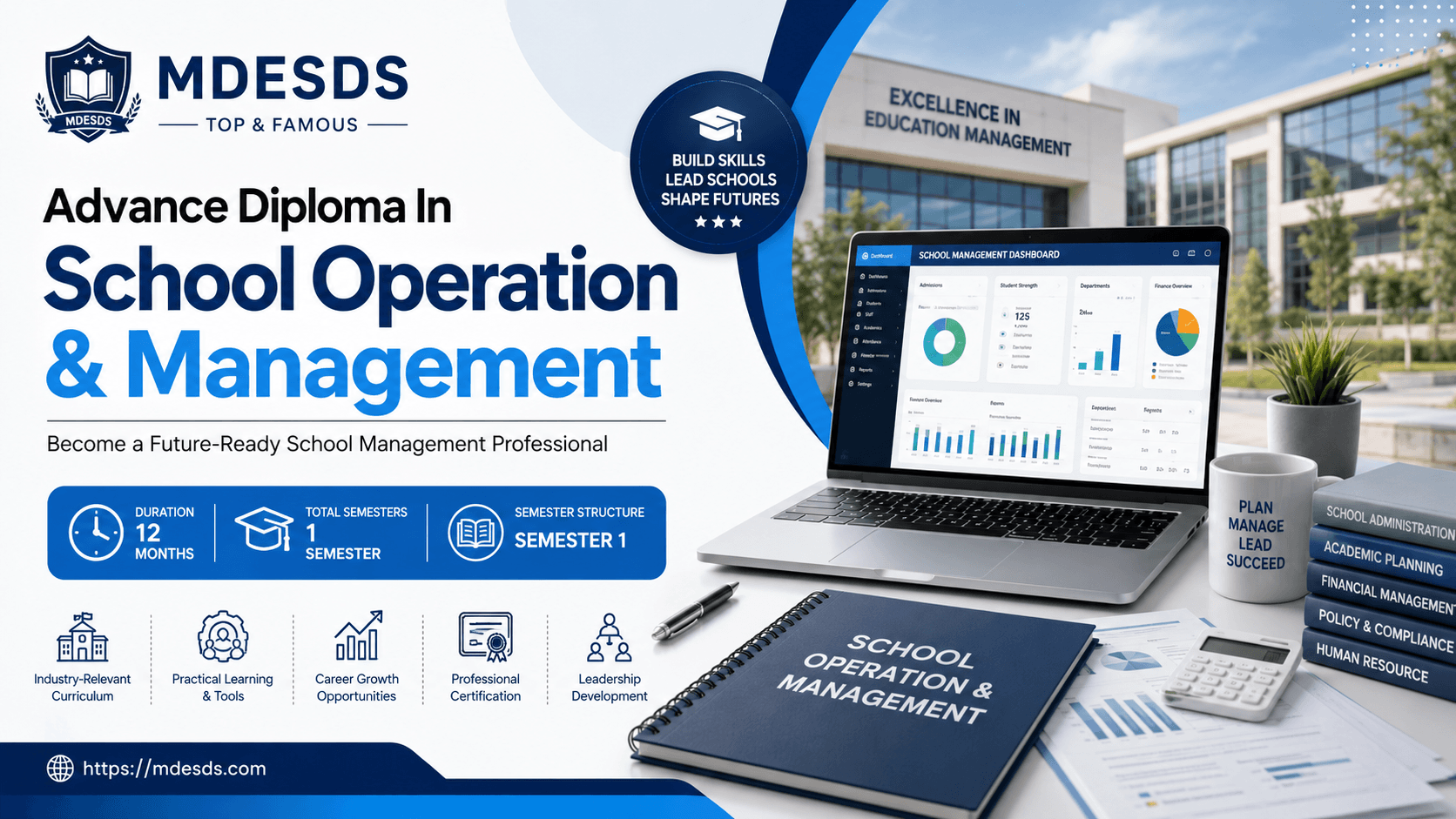
Master school administration with MDESDS's 12-month Advance Diploma In School Operation & Management. Learn HR, inventor...
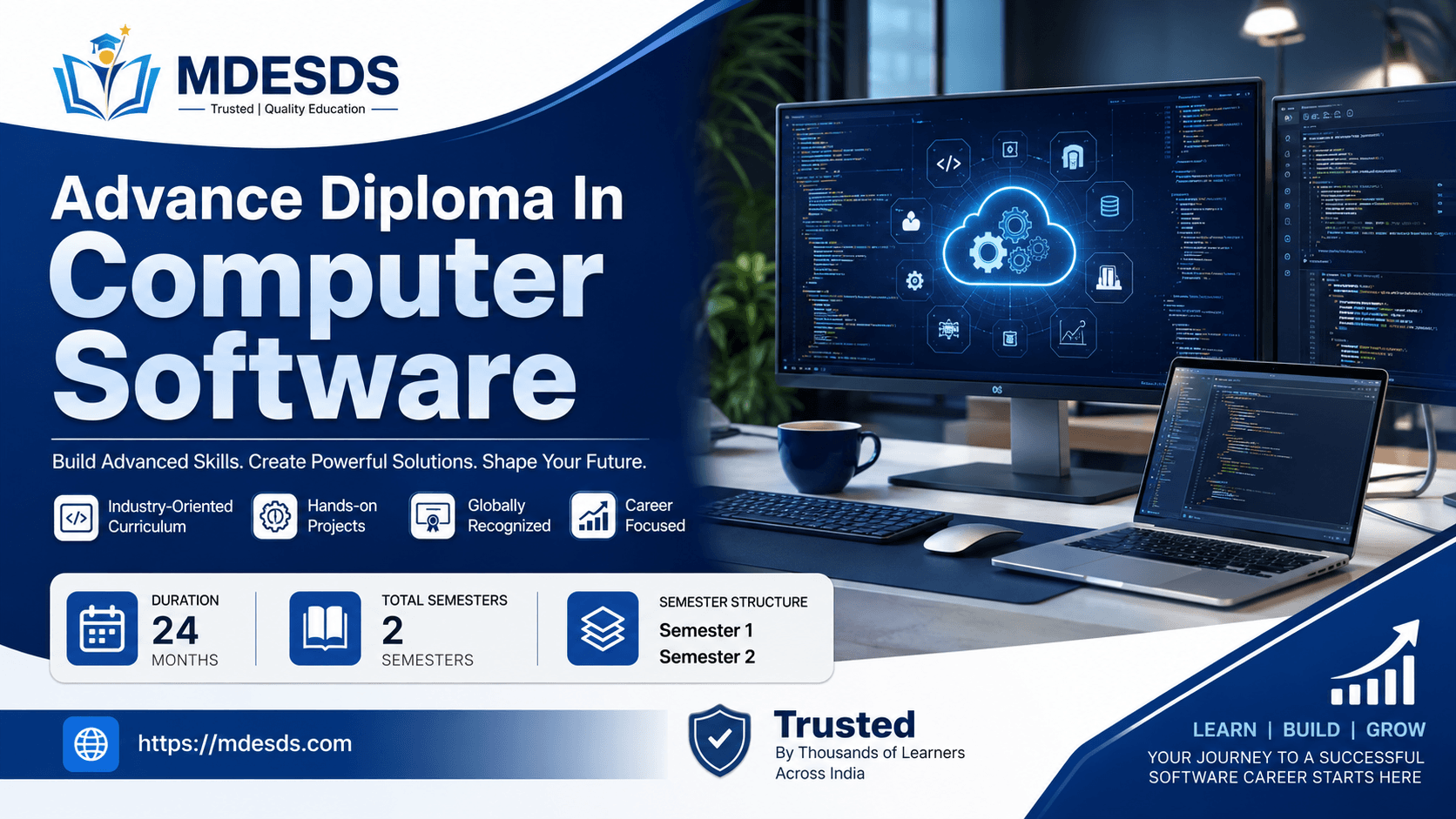
Master in-demand IT skills with the Advance Diploma In Computer Software from MDESDS. 24-month hybrid course with hands-...
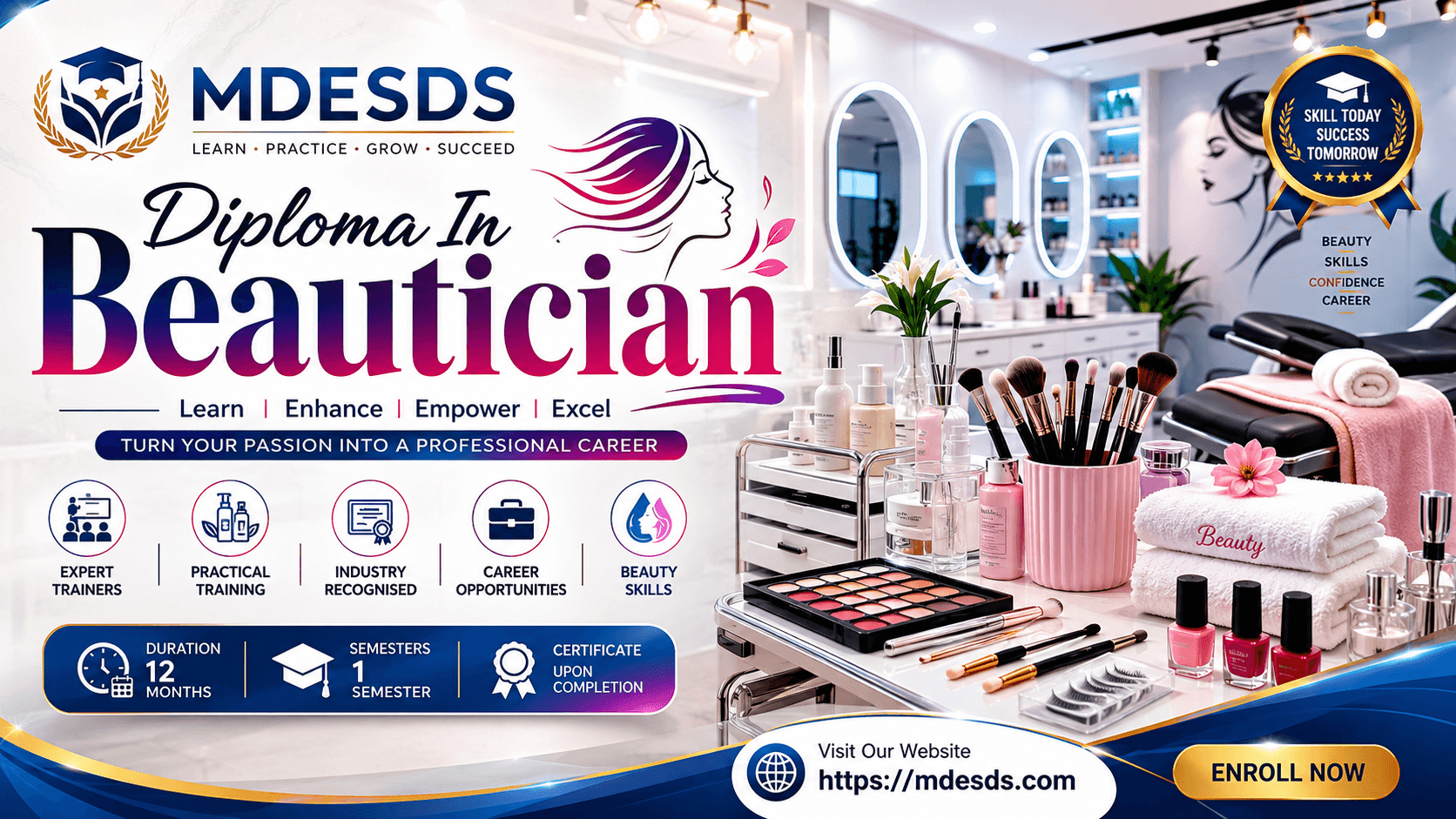
Elevate your career with MDESDS's 12-month hybrid Diploma In Beautician. Master makeup, skincare, and nail artistry thro...
Join MDESDS and build a successful future with industry-recognized diploma, certificate, vocational, and professional training programs. Limited seats available for the current academic session. Apply today and take the next step toward your career goals.