Search Our Courses


No matching course found.
No matching course found.

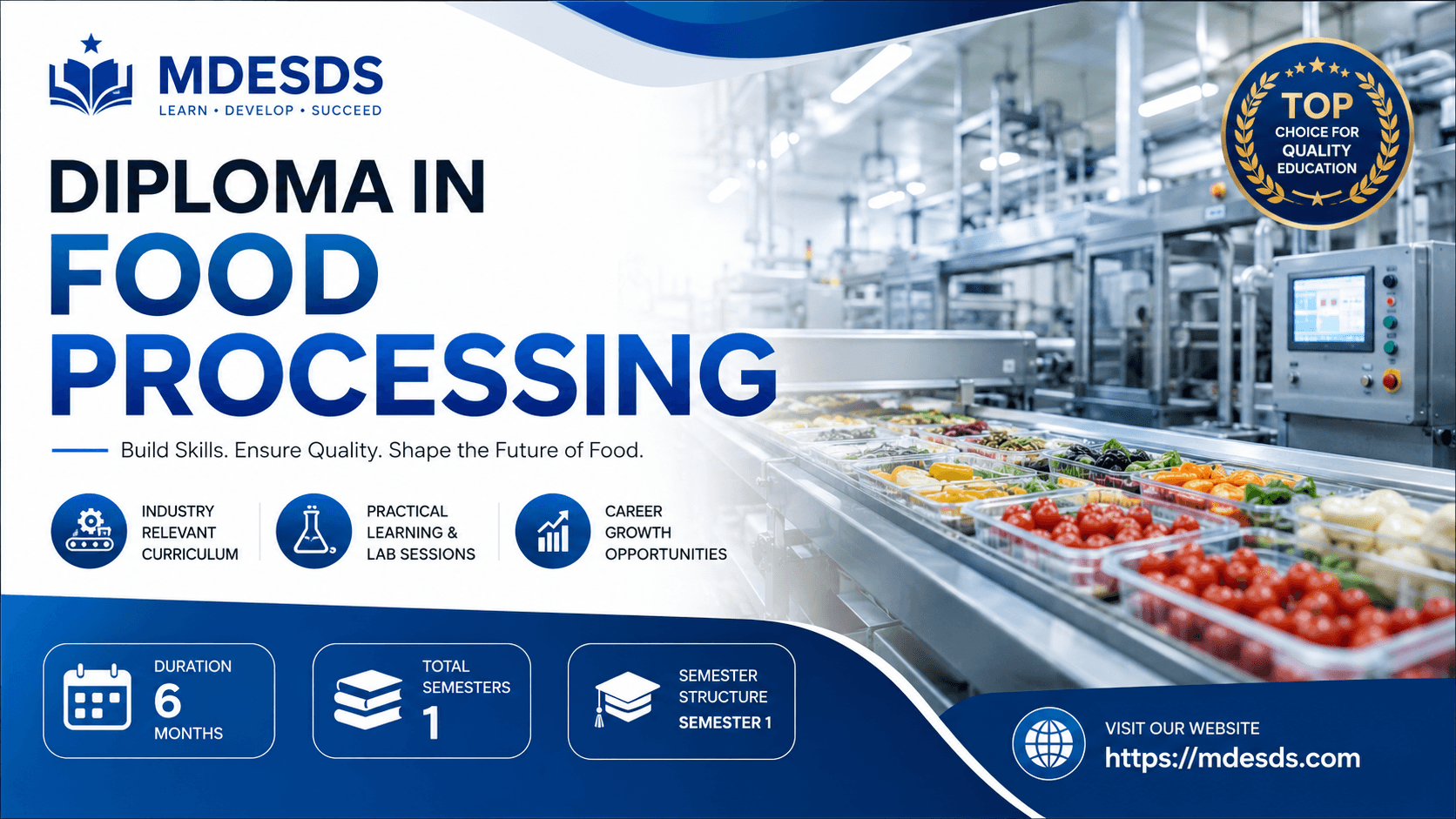
Gain hands-on skills with our 6-month Diploma In Food Processing at MDESDS. Learn hybrid food processing, quality control, and culinary arts today.
The global food industry is expanding at an unprecedented rate. With a growing population and shifting consumer preferences toward packaged, ready-to-eat, and nutritious food, the demand for skilled professionals in food manufacturing and culinary management is at an all-time high. Food processing bridges the gap between raw agricultural produce and the final consumer-packaged goods, making it a critical pillar of the global economy.
If you have ever wondered how food products maintain their quality from farm to fork, or if you dream of building a successful career in food production, culinary arts, or quality management, the Diploma In Food Processing at MDESDS is your ultimate stepping stone. This comprehensive program is designed to transform passionate learners into industry-ready professionals equipped to handle the modern demands of the food and beverage sector.
A Diploma In Food Processing is a specialized professional program that focuses on the techniques, technologies, and culinary sciences involved in transforming raw ingredients into value-added food products. It combines the principles of food science, nutrition, hygiene, cost management, and commercial cookery to provide a wholesome understanding of the culinary and food manufacturing industries.
At MDESDS, this program is carefully structured as a 6-month fast-track course delivered through a flexible hybrid learning mode. This means you get the best of both worlds: convenient online theoretical sessions that fit into your schedule, combined with intensive, hands-on practical training that builds real-world confidence. Whether you want to work in a high-tech food manufacturing plant, manage a commercial kitchen, or start your own food venture, this diploma gives you the operational knowledge needed to succeed.
Our curriculum is designed by education experts and industry veterans to align perfectly with current market standards. The 6-month program is consolidated into a highly focused single-semester system, ensuring that you grasp both theoretical foundations and practical execution without any fluff.
The curriculum for the Diploma In Food Processing balances kitchen operations, culinary science, financial planning, and safety protocols. Below is the detailed breakdown of the subjects you will master during this 6-month journey:
This foundational subject introduces students to the core concepts of professional culinary arts. You will learn about kitchen hierarchy, classical cooking techniques, the behavior of different food ingredients under heat, and the foundational equipment used in commercial food processing setups.
Skills Gained: Knife skills, mastery of basic cooking methods (blanching, roasting, simmering), kitchen organization, and ingredient identification.
Practical Benefits: Understanding the basics of cookery allows you to standardize recipes and comprehend how raw materials behave during large-scale food preparation, reducing wastage and improving efficiency.
Food safety is non-negotiable. This module focuses heavily on hygiene standards, sanitation protocols, waste management, and quality control systems like HACCP (Hazard Analysis Critical Control Point). You will explore how to prevent contamination and maintain food safety across various processing stages.
Skills Gained: Quality auditing, hygiene protocol implementation, shelf-life assessment, and deep knowledge of food safety regulations.
Practical Benefits: This knowledge ensures that any food product you handle or process meets statutory health standards, protecting consumers and preserving the brand reputation of your employer or business.
A great food professional must also understand business economics. This module teaches you how to calculate food costs, manage yields, minimize kitchen overheads, and price menu items or products profitably. Alongside financial management, you will dive into the rich world of Indian cuisine, understanding the complex spice blends, regional bases, and traditional processing methods that define Indian food.
Skills Gained: Recipe costing, yield testing, inventory management, and authentic Indian culinary preparation.
Practical Benefits: You will possess the financial acumen to run a profitable kitchen or food processing unit, knowing exactly how to balance premium quality with cost-effective operations.
The larder department (Garde Manger) is responsible for cold food preparations, including salads, hors d'oeuvres, charcuterie, and food preservation techniques like curing and pickling. This subject combines detailed theoretical principles with rigorous kitchen practicals under our hybrid learning mode, allowing you to execute what you learn.
Skills Gained: Advanced food preservation, cold kitchen management, aesthetic food presentation, and large-scale meal production.
Practical Benefits: You develop the muscle memory and technical competence required to work under pressure in commercial kitchens, catering companies, or food manufacturing labs.
The Diploma In Food Processing is highly versatile, making it ideal for a diverse group of aspirants:
Aspiring Chefs & Bakers: Individuals who want to back their culinary passion with formal, scientific knowledge of food preservation and quality control.
Food Entrepreneurs: Anyone planning to launch a food truck, cloud kitchen, catering business, or packaged food brand.
Hospitality Professionals: Existing kitchen staff looking to upgrade their skills and earn a formal qualification for faster career promotions.
Students & Graduates: High school graduates or college students seeking a quick, industry-focused certification that guarantees job readiness within 6 months.
Enrolling in this diploma program offers tangible advantages that set you apart in the competitive job market:
Fast-Track Career Entry: With a duration of just 6 months, you save time and enter the workforce much faster than traditional degree holders.
Flexibility of Hybrid Mode: The hybrid learning mode ensures you do not have to put your life on hold. Learn theory at your own pace online and attend vital practical sessions to perfect your craft.
Dual Focus on Science and Art: This course does not just teach you how to cook; it teaches you how food behaves chemically, how to preserve it safely, and how to price it for a profit.
Industry-Aligned Certification: Holding a specialized Diploma In Food Processing from a respected institute like MDESDS signals to employers that you have undergone verified, structured training.
The food processing sector is one of the largest industries globally, offering exceptional job security and rapid career progression. Upon successfully completing your Diploma In Food Processing, you can explore dynamic career pathways such as:
| Job Role | Description |
| Food Quality Inspector | Ensuring food products meet safety, hygiene, and government regulatory standards before reaching market shelves. |
| Production Supervisor | Managing daily operations, machinery efficiency, and staff performance in food manufacturing plants. |
| Commis Chef / Larder Chef | Working in hotels, restaurants, or cruise ships, focusing on hot kitchen production or cold food preservation. |
| Catering Manager | Overseeing food preparation, cost control, and logistics for large-scale corporate events, hospitals, or airlines. |
| Food Entrepreneur | Utilizing your knowledge of costing and preservation to launch your own packaged snack, pickle, bakery, or sauce brand. |
Beyond immediate jobs, the scope of food processing is evolving with automation and sustainable packaging. This diploma gives you the foundation to pursue higher technical certifications, transition into food research and development (R&D), or venture into global export-import businesses dealing with processed foods.
MDESDS stands out as a premier institute dedicated to delivering skill-based education that matters. When you enroll in our Diploma In Food Processing, you benefit from:
Expert Faculty: Learn from experienced educators and professional chefs who bring real-world industry insights into the classroom.
State-of-the-Art Curriculum: Our syllabus is constantly updated to match the latest trends in food technology, culinary arts, and safety compliances.
Student-Centric Hybrid Learning: We understand that flexibility is key. Our hybrid model is tailored to provide deep learning without overwhelming your daily routine.
Comprehensive Skill Development: We focus equally on hard technical skills, financial understanding, and workplace professionalism to ensure you stand out in interviews.
Are you ready to turn your passion for food into a professional qualification? Don't wait to build the future you deserve. Equip yourself with the skills, confidence, and certification required to conquer the food industry.
The Diploma In Food Processing course is designed to provide practical knowledge, professional skills, and industry-relevant training. With a duration of 6 Months, this program helps students develop the expertise required for academic and professional success.
Launch your hospitality career with MDESDS's 12-month Diloma In Food & Beverage Service. Learn core service skills, hygi...
Master essential digital skills with the 3-month Certificate In Basic Computer course by MDESDS. Enroll today to boost y...
Build a successful career in modern finance with MDESDS's 12-month hybrid Diploma in Computer Financial Accounting. Lear...
Join MDESDS and build a successful future with industry-recognized diploma, certificate, vocational, and professional training programs. Limited seats available for the current academic session. Apply today and take the next step toward your career goals.