Search Our Courses



No matching course found.
No matching course found.

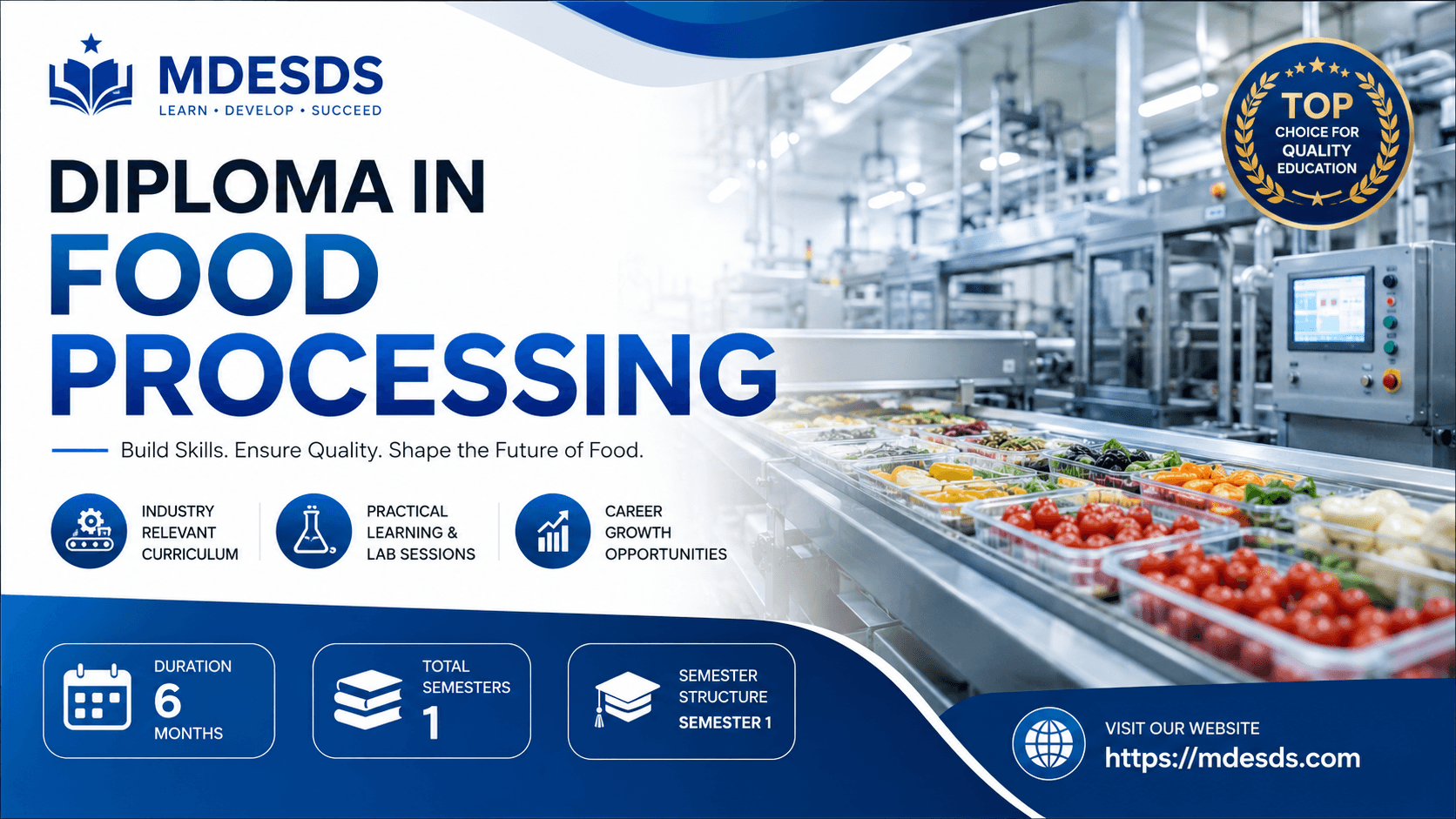
Elevate your career with the Diploma In Food Processing from MDESDS. Gain expert culinary, engineering, and nutrition skills in a 24-month hybrid program.
The global food industry is expanding at a breakneck pace. Modern consumers no longer just demand food; they demand safe, packaged, nutritious, and innovatively processed food solutions. Behind every packaged snack, preserved beverage, and high-end culinary creation is a team of skilled food professionals who blend the art of cooking with the precision of science and engineering.
If you have ever wanted to turn your passion for food into a highly lucrative, stable, and globally recognized career, the Diploma In Food Processing offered by MDESDS is your ultimate stepping stone. Food processing acts as the vital bridge between agriculture and consumption. By learning how to transform raw agricultural ingredients into value-added food products, you position yourself at the center of a recession-proof sector.
MDESDS has meticulously designed this program to fulfill the massive talent shortage in the food tech, hospitality, and manufacturing industries. Whether your goal is to manage a massive food manufacturing plant, launch your own artisan bakery brand, or work as a quality control expert, this course gives you the competitive edge needed to succeed.
The Diploma In Food Processing is a comprehensive, specialized program that trains individuals in the core aspects of food preservation, preparation, culinary arts, food safety, and processing plant engineering. Unlike traditional culinary courses that only teach cooking, or strict engineering courses that focus purely on machinery, this diploma offers an interdisciplinary approach.
Spanning a robust duration of 24 months, this program is delivered via a flexible hybrid learning mode. This means students get the best of both worlds: convenient online theoretical instruction coupled with rigorous, hands-on practical training in state-of-the-art facilities. Over the course of 2 semesters, students dive deep into everything from the biochemistry of nutrition to the mechanical operations of large-scale food machinery. It is an industry-aligned curriculum designed to transform raw passion into highly technical professional expertise.
The Diploma In Food Processing at MDESDS stands out due to its dual focus on culinary excellence and industrial food engineering. Spread across a 24-month duration, the curriculum is divided into two intensive semesters.
Below is the detailed breakdown of the subjects you will master, along with the specific skills and practical benefits each module offers.
The first semester focuses heavily on establishing a rock-solid foundation in both commercial food preparation and the core principles of infrastructure and food systems.
Larder Practical + Bakery & Patisserie Theory
Practical Benefits: Students learn the intricate arts of the cold kitchen (larder), including food preservation, charcuterie, and salad formulation, alongside the science behind baking. You will understand how yeast, gluten, and temperature interact to create perfect baked goods.
Skills Gained: Cold food presentation, portion control, recipe scaling, baking chemistry, and dough fermentation management.
Bakery & Patisserie Practical + Hygiene
Practical Benefits: This hands-on module brings baking theory to life. Students spend hours mastering the production of breads, pastries, and desserts while strictly implementing global food hygiene standards (like HACCP) to prevent contamination.
Skills Gained: Commercial baking techniques, pastry decoration, industrial sanitation protocols, and cross-contamination prevention.
Costing + Basics Of Indian Cooking
Practical Benefits: Understanding food is only half the battle; understanding profit is what builds a career. This subject combines the cultural, aromatic science of Indian culinary arts with the business math of food costing and inventory management.
Skills Gained: Menu engineering, food cost percentage calculation, spice blending, bulk cooking techniques, and waste reduction.
Electrical & Mechanical Engineering
Practical Benefits: Modern food processing relies heavily on automated machinery. This subject teaches students the operational mechanics and electrical systems of industrial ovens, mixers, homogenizers, and pasteurizers.
Skills Gained: Equipment troubleshooting, preventative maintenance, electrical safety, and understanding machinery blueprints.
Public Health Engineering & Thermal Engineering
Practical Benefits: Food preservation requires precise temperature controls. This subject covers thermodynamics, freezing, drying, and sterilization processes, alongside waste management systems that protect public health.
Skills Gained: Thermal processing calculations, cold chain management, industrial waste disposal, and water purification techniques.
The second semester shifts gears toward the structural, structural-engineering, and advanced nutritional aspects of food processing plants, ensuring students can manage both the food product and the production environment itself.
Building Const. & Maintenance Engineering
Practical Benefits: Food processing units must comply with strict structural laws to ensure hygiene and safety. Students learn how food factories are built, layouts that prevent pest infestations, and how to maintain building integrity.
Skills Gained: Factory layout optimization, drainage planning, structural safety auditing, and material wear-and-tear assessment.
Concrete Technology & Civil Engineering Drawing
Practical Benefits: This unique module provides food professionals with the capability to read and design blueprints for processing facilities, understanding the heavy-duty concrete flooring needed to support massive industrial machinery.
Skills Gained: Blueprints interpretation, spatial planning, industrial floor loading dynamics, and facility design.
Strength Of Material & Hydraulics
Practical Benefits: Teaches the physics behind liquid food movement. Whether pumping milk through a dairy plant or moving thick purees, understanding hydraulics is vital for maintaining fluid flow without damaging equipment.
Skills Gained: Fluid dynamics management, pressure valve regulation, pump troubleshooting, and material stress analysis.
Cookery & Larder Theory + Cookery Practical
Practical Benefits: An advanced deep-dive into international culinary styles, advanced larder work, and high-volume food production kitchen management.
Skills Gained: Advanced culinary styling, bulk food production management, menu development, and kitchen leadership.
Nutrition
Practical Benefits: Consumers want healthy options. This subject teaches the chemical composition of food, nutrient retention during processing, fortification, and how to create accurate nutritional labels.
Skills Gained: Nutritional profiling, food labelling compliance, recipe fortification, and dietary analysis.
The Diploma In Food Processing is an incredibly versatile qualification. It is perfectly suited for:
Aspiring Chefs and Bakers: Who want to back their culinary talents with technical, scientific, and operational knowledge to run large-scale operations.
Entrepreneurs: Individuals looking to launch their own food packaged brands, cloud kitchens, bakery chains, or food preservation startups.
Production Supervisors: Current entry-level workers in food factories who want a formal qualification to transition into high-paying managerial roles.
Science and Hospitality Students: High school graduates or college students who want a highly specialized, career-oriented path rather than a generic degree.
To enroll in this 24-month program at MDESDS, candidates should ideally have completed their 10+2 schooling from a recognized board. A background in science or home science is helpful but not mandatory, as the course builds all concepts from the ground up.
Choosing to study for a Diploma In Food Processing provides immediate and long-term professional advantages:
Flexible Hybrid Learning: The hybrid learning mode ensures you don't have to put your life on hold. You can balance online conceptual learning with well-scheduled, intensive practical workshops.
Dual Skill Proficiency: You don't just graduate as a cook or an engineer; you graduate as an all-in-one professional who understands recipes, nutrition, machinery, and factory layouts.
High Industry Demand: Fast-moving consumer goods (FMCG) and hospitality brands are constantly searching for professionals who understand food safety, processing mechanisms, and cost optimization.
Fast-Track Career Path: Within just 24 months, you gain practical, industry-ready skills that make you immediately employable, saving you years of generic academic study.
The career scope after completing your Diploma In Food Processing from MDESDS is expansive and globally viable. Food is a fundamental human need, meaning your skills will remain in demand regardless of economic shifts.
Graduates can step into prestigious roles such as:
| Job Role | Description |
| Food Production Manager | Overseeing the daily operations, staff, and assembly lines within large-scale food manufacturing factories. |
| Quality Control (QC) Inspector | Ensuring all processed food batches meet rigorous national and international hygiene, safety, and taste guidelines. |
| Product Development Specialist | Working in labs to formulate new food items, improve shelf-life, and perfect food flavors for commercial packaging. |
| Bakery & Patisserie Entrepreneur | Owning and operating artisan or commercial scale bakeries, catering units, or specialized dessert brands. |
| Cold Chain & Logistics Supervisor | Managing the temperature-controlled supply chain that keeps perishable foods fresh from farm to retail shelves. |
MDESDS is a pioneer in delivering career-focused, high-impact vocational training. When you choose our Diploma In Food Processing, you are investing in an education that pays off.
Expert Faculty: Learn from seasoned culinary chefs, food scientists, and engineering experts who bring real-world industry insights into the classroom.
State-of-the-Art Labs: Gain hands-on exposure to advanced kitchen setups and food processing apparatus during your practical sessions.
Unrivaled Placement Support: MDESDS maintains deep ties with the hospitality, retail, and food manufacturing industries, helping you secure internships and placement opportunities upon graduation.
Student-Centric Approach: From comprehensive study materials to flexible scheduling via our hybrid learning mode, we ensure our students are supported every single step of the way.
Don't wait to turn your passion for food into a professionally rewarding career. Secure your future in one of the world's fastest-growing industries today.
Ready to enroll or have more questions about our Diploma In Food Processing? Get in touch with our expert admissions counselors right away!
The Diploma In Food Processing course is designed to provide practical knowledge, professional skills, and industry-relevant training. With a duration of 24 Months, this program helps students develop the expertise required for academic and professional success.
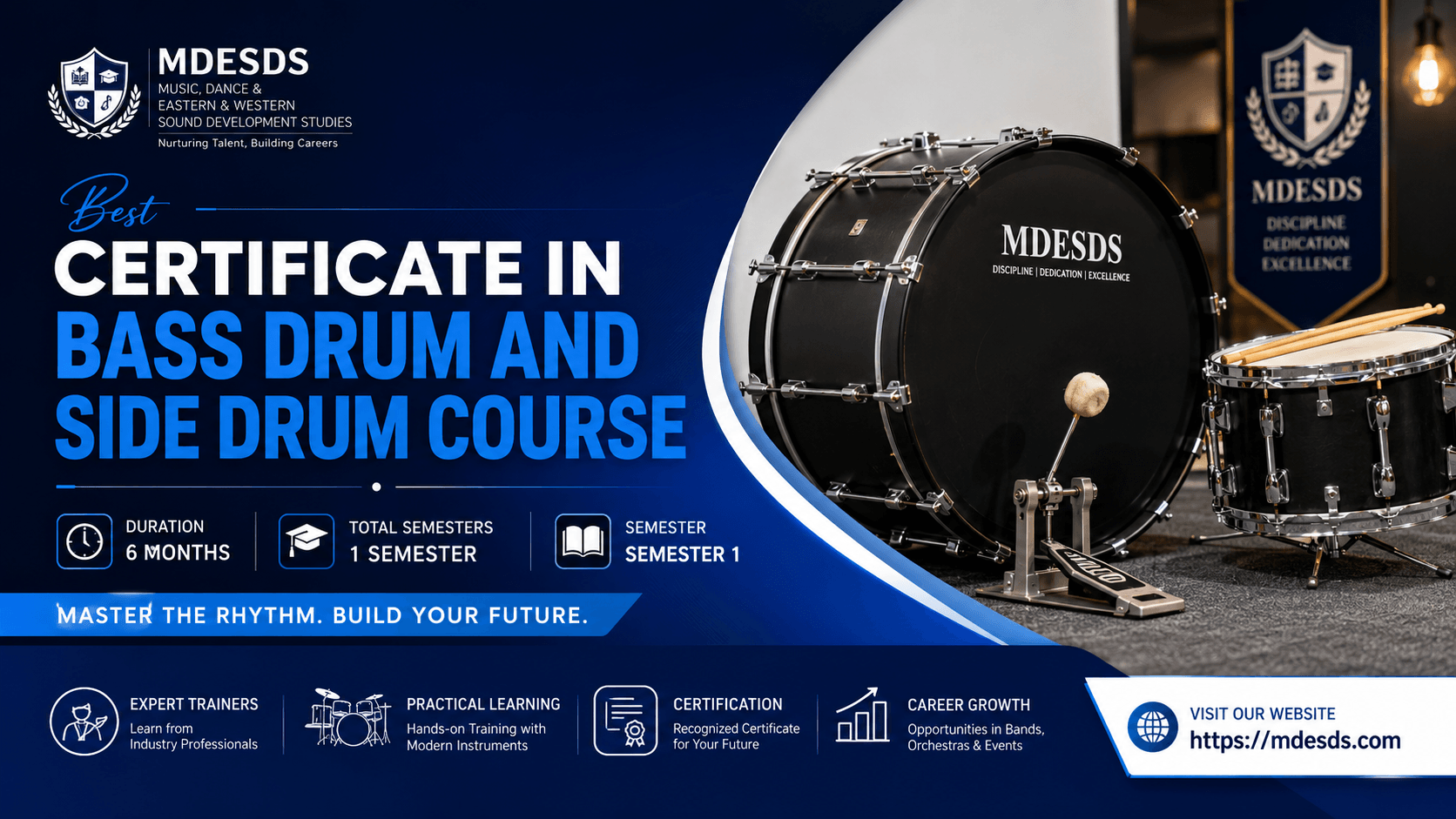
Master percussion with our 6-month hybrid Certificate In Bass Drum And Side Drum Course at MDESDS. Build professional sk...
Unlock top career opportunities with our 6-month Diploma Course In Stenography at MDESDS. Master shorthand, typing, and ...

Build a successful career with our Diploma In Event Management. Master budgeting, branding, and execution through hybrid...
Join MDESDS and build a successful future with industry-recognized diploma, certificate, vocational, and professional training programs. Limited seats available for the current academic session. Apply today and take the next step toward your career goals.