Search Our Courses


No matching course found.
No matching course found.

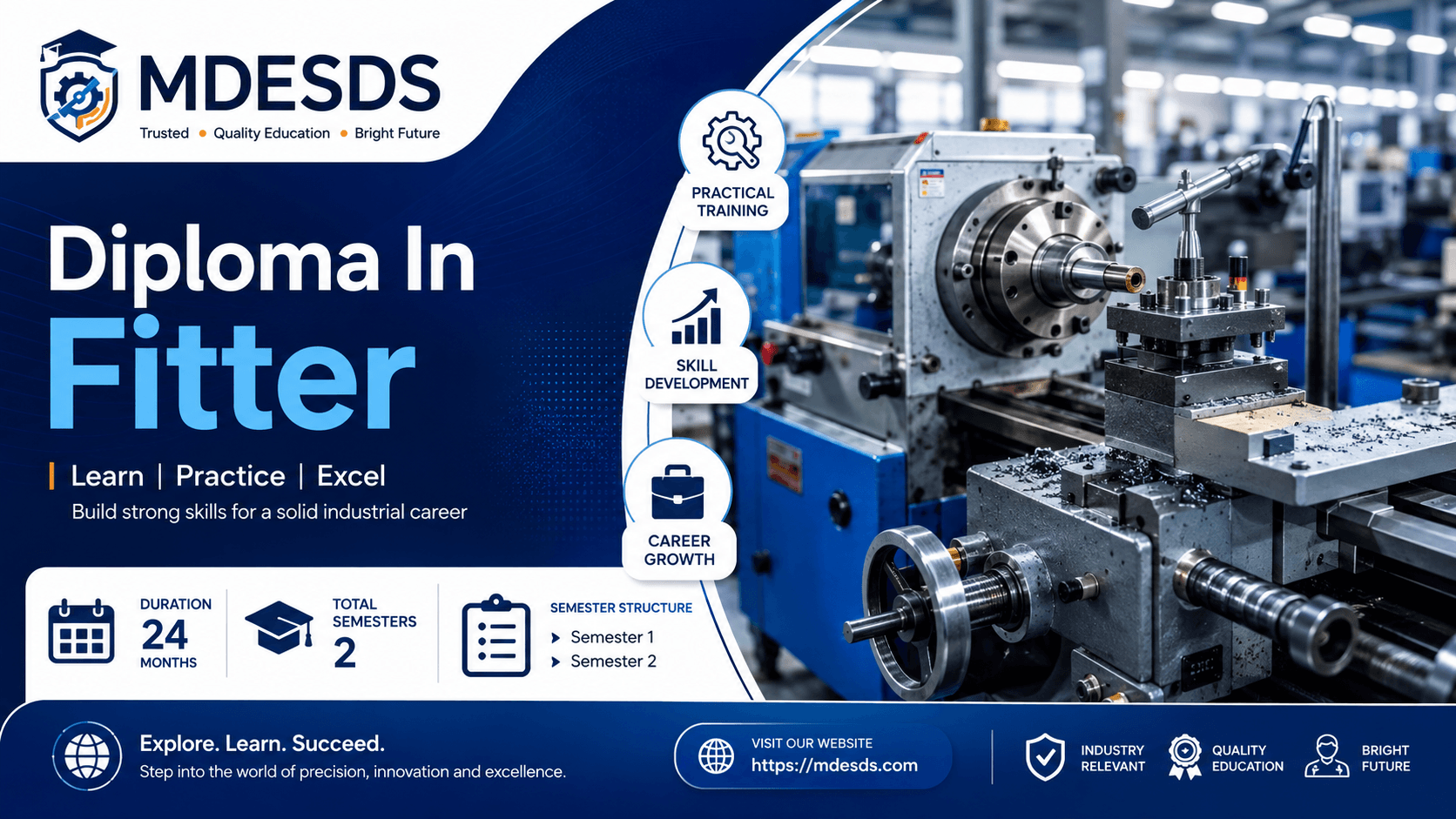
Master precision engineering with the 24-month Diploma In Fitter at MDESDS. Gain hands-on manufacturing skills through hybrid learning. Apply today!
In today's fast-growing industrial and manufacturing landscape, precision is everything. From the massive machinery running assembly lines to the complex components inside power plants, every mechanical system relies on perfectly fitted parts to operate safely and efficiently. This is where the role of a professional fitter becomes indispensable.
Choosing to pursue a Diploma In Fitter is one of the most secure ways to build a stable, highly rewarding technical career. Industrial production cannot function without skilled technicians who understand how to read blueprints, shape metals, assemble complex machinery, and maintain production equipment.
At MDESDS, we have engineered a comprehensive, industry-aligned training program designed to bridge the gap between theoretical engineering concepts and real-world shop floor execution. This course is structured to take you from a foundational beginner to a highly competent technical professional, opening doors to top-tier manufacturing units, heavy industries, and infrastructure projects globally.
The Diploma In Fitter is a specialized technical and vocational training program that focuses on the cutting, fitting, assembling, and maintaining of machinery, structural components, and mechanical layouts. Unlike purely theoretical engineering courses, this program emphasizes practical craftsmanship. Students learn exactly how to manipulate metals and other engineering materials to match precise industrial specifications down to the millimeter.
At MDESDS, this program is delivered over a 24-month duration, offering the perfect balance of comprehensive depth and rapid entry into the job market. To accommodate both working professionals and full-time students, we offer this program through a flexible hybrid learning mode. This means you can master core conceptual knowledge online at your own pace while attending intensive, hands-on practical training sessions in fully equipped workshops to master your physical craft.
Our Diploma In Fitter program spans 24 months and is systematically organized into two distinct, highly focused semesters. Each semester builds upon the last, taking you sequentially from fundamental mechanical concepts to complex assembly and precision maintenance engineering.
The first semester introduces you to the core environment of manufacturing workshops, materials science, and fundamental structural trades. You will develop a deep respect for mechanical tolerances, workplace safety, and the essential hand tools that form the bedrock of all engineering projects.
Role Of Carpenter / Description Of Trade
Practical Benefits: Before working with heavy metals, understanding basic structural design through woodworking teaches you the fundamentals of structural joinery, grain alignment, and spatial planning. It broadens your capability to handle mixed-material industrial projects.
Skills Gained: Technical blueprint reading, basic structural layout design, material selection, and high-level dimensional awareness.
Different Type Of Tools, Equipments In Carpentry
Practical Benefits: Learning the operational mechanics of diverse shaping and cutting machinery ensures you can choose the most efficient tool for structural fabrication work, reducing material waste.
Skills Gained: Safe operation of industrial cutting machinery, edge-tool sharpening, alignment verification, and workshop equipment safety protocols.
Function & Uses Of Various Tools Equipment
Practical Benefits: This module removes the guesswork from engineering fabrication. By understanding the precise mechanical advantage of each specialized tool, you learn to execute tasks with maximum efficiency and zero damage to raw materials.
Skills Gained: Advanced tool calibration, diagnostic troubleshooting, selecting optimal tool-speed ratios, and custom component alignment.
The second semester transitions directly into the core disciplines of heavy mechanical fitting, metalwork, high-precision tolerances, and advanced machinery assembly.
Care And Use Of Tool, Materials Used In Fitting
Practical Benefits: Industrial components fail if the wrong metal is paired with the wrong tool or environment. This subject teaches you how different metals behave under stress, heat, and friction, alongside the preventative maintenance required to keep heavy-duty industrial tools in peak operational condition.
Skills Gained: Metallurgy analysis, precision tool preservation, identifying material stress points, and implementing preventative tool maintenance schedules.
Selection And Correct Use Of Tools
Practical Benefits: In high-stakes manufacturing environments, choosing the wrong tool can ruin expensive components or cause severe workplace injuries. This subject trains your analytical decision-making to seamlessly match industrial tasks with the exact technical tool required for flawless, micro-tolerance execution.
Skills Gained: Micro-measurement reading (using vernier calipers and micrometers), advanced mechanical safety compliance, error diagnosis, and high-precision metal filing and finishing techniques.
The Diploma In Fitter at MDESDS is specifically designed for action-oriented individuals who prefer practical, tangible problem-solving over sitting behind a desk all day. This course is an ideal fit for:
High School Graduates: Students looking for an affordable, direct, and fast-track pathway into industrial careers instead of spending four years on purely abstract degrees.
Aspiring Mechanical Technicians: Individuals who possess a natural knack for machinery, fixing mechanical systems, and understanding how things work under the hood.
Industrial Workers Seeking Certification: Uncertified workshop hands or factory technicians who want to validate their practical experience with a recognized diploma to secure promotions and higher-paying roles.
Career Changers: Anyone seeking to transition into the stable, recession-proof field of industrial manufacturing and infrastructure development.
Investing 24 months of your professional development in this diploma unlocks several critical career advantages:
The Power of Hybrid Learning: Our flexible training structure ensures that your education doesn't force you to put your entire life on hold. You study theory dynamically online and master your physical craftsmanship during scheduled practical laboratory sessions.
High Market Demand: Every country investing in infrastructure, clean energy, automotive production, and automation requires certified fitting professionals. Your skills will remain relevant for decades.
Rapid Career Entry: While a traditional engineering degree requires four to five years of study, our intensive 24-month program gets you certified, skilled, and earning a professional income much faster.
Global Skill Portability: The technical standards, blueprint notations, and tool safety procedures you learn at MDESDS are universally recognized worldwide, giving you the freedom to pursue career opportunities abroad.
Upon successful completion of your Diploma In Fitter from MDESDS, you will be fully qualified to take on various critical roles across diverse industries, including automotive, aerospace, railway networks, oil and gas, power generation, and shipping docks.
Mechanical Fitter: Responsible for assembling, installing, and aligning complex machinery and production equipment on factory floors.
Maintenance Technician: Overseeing regular diagnostic checkups, part replacements, and emergency repairs on heavy industrial systems to keep production moving.
Pipe Fitter: Specializing in creating, installing, and maintaining high-pressure pipe systems used in energy plants and chemical refineries.
Quality Control Inspector: Reviewing finished products and manufactured parts to ensure they match exact blueprint blueprints and microscopic design tolerances.
Lathe & Machinist Specialist: Operating advanced machinery to shape, cut, and drill custom metal pieces required for specific engineering projects.
The scope of a certified fitter extends far beyond entry-level factory work. With a few years of hands-on floor experience, diploma holders regularly advance into roles such as Workshop Supervisor, Maintenance Manager, or Plant Production Coordinator. Additionally, the deep technical understanding of fabrication gained during this course provides an excellent foundation for launching your own mechanical workshop or contracting manufacturing firm.
MDESDS stands out as a premier educational institute committed to delivering high-impact vocational training that meets modern industrial requirements.
We don't just teach from old manuals. Our curriculum is constantly reviewed by industrial engineering experts to reflect modern shop floor practices. Our workshops are outfitted with modern machinery, testing rigs, and precision safety gear, ensuring that when you step onto a factory floor on your first day of work, you feel entirely confident and at home. Combined with our flexible 24-month hybrid learning delivery and dedicated job placement support network, MDESDS provides a clear, reliable runway to a secure technical career.
Don't leave your career trajectory to chance. Build a resilient, high-demand technical skill set that employers are actively searching for right now. Join the upcoming batch of the Diploma In Fitter at MDESDS and transform your natural mechanical aptitude into a lifelong professional career.
Our admissions team is ready to answer your questions, walk you through the hybrid learning schedule, and help you get enrolled seamlessly.
No subjects available.
The Diploma In Fitter course is designed to provide practical knowledge, professional skills, and industry-relevant training. With a duration of 24 Months, this program helps students develop the expertise required for academic and professional success.
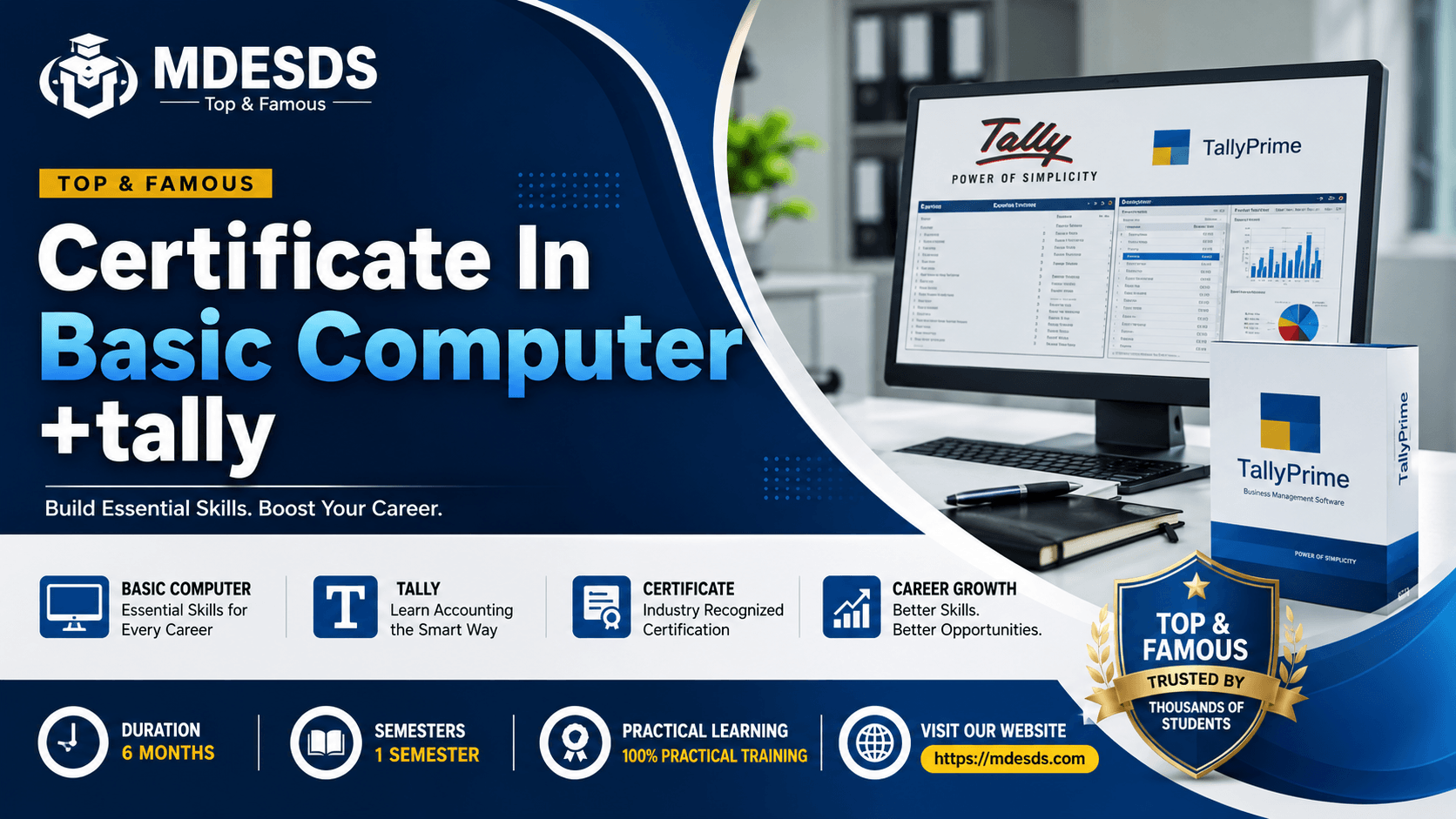
Master essential office software and financial accounting with our Certificate In Basic Computer +tally. Enroll at MDESD...
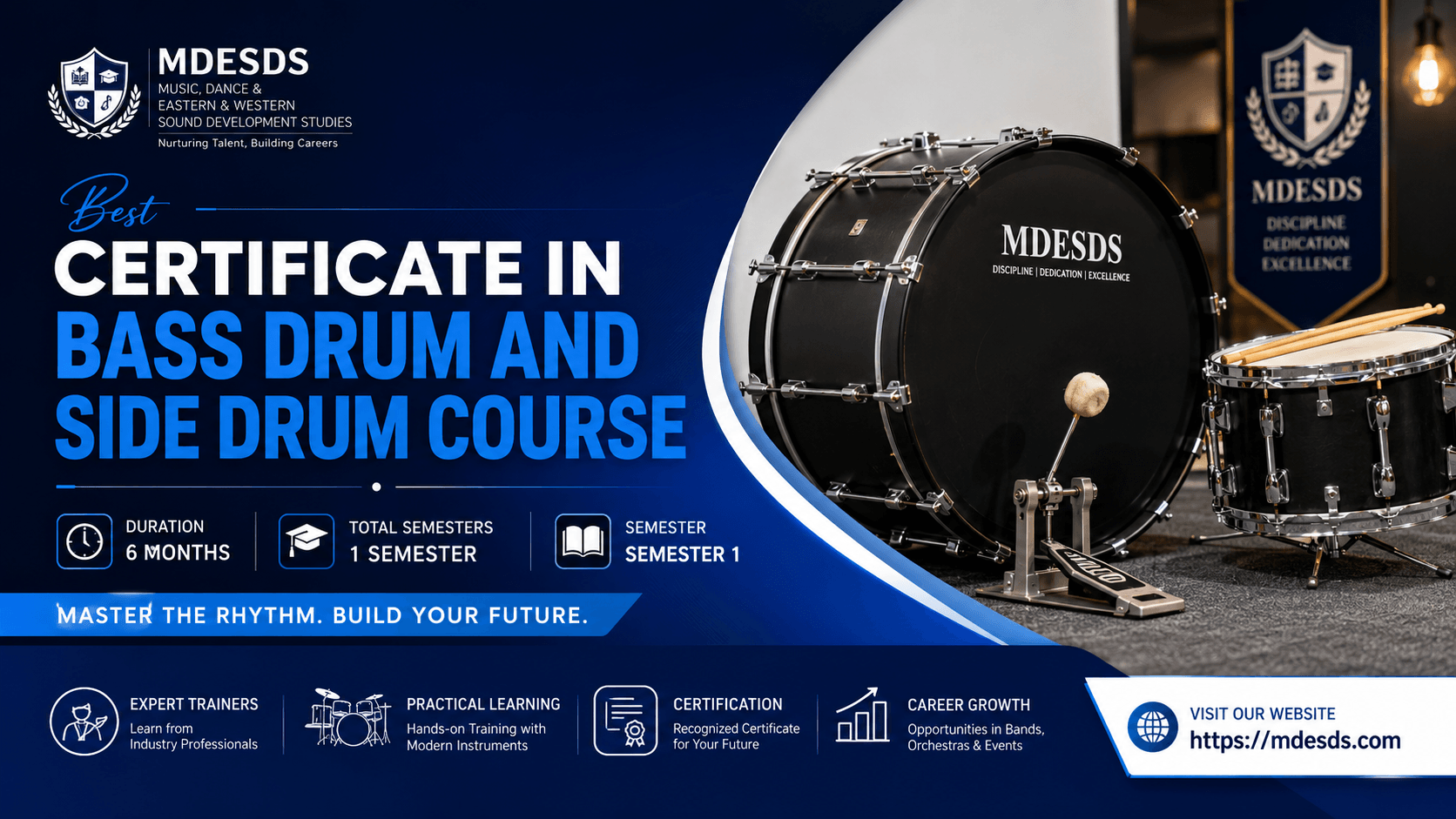
Master percussion with our 6-month hybrid Certificate In Bass Drum And Side Drum Course at MDESDS. Build professional sk...
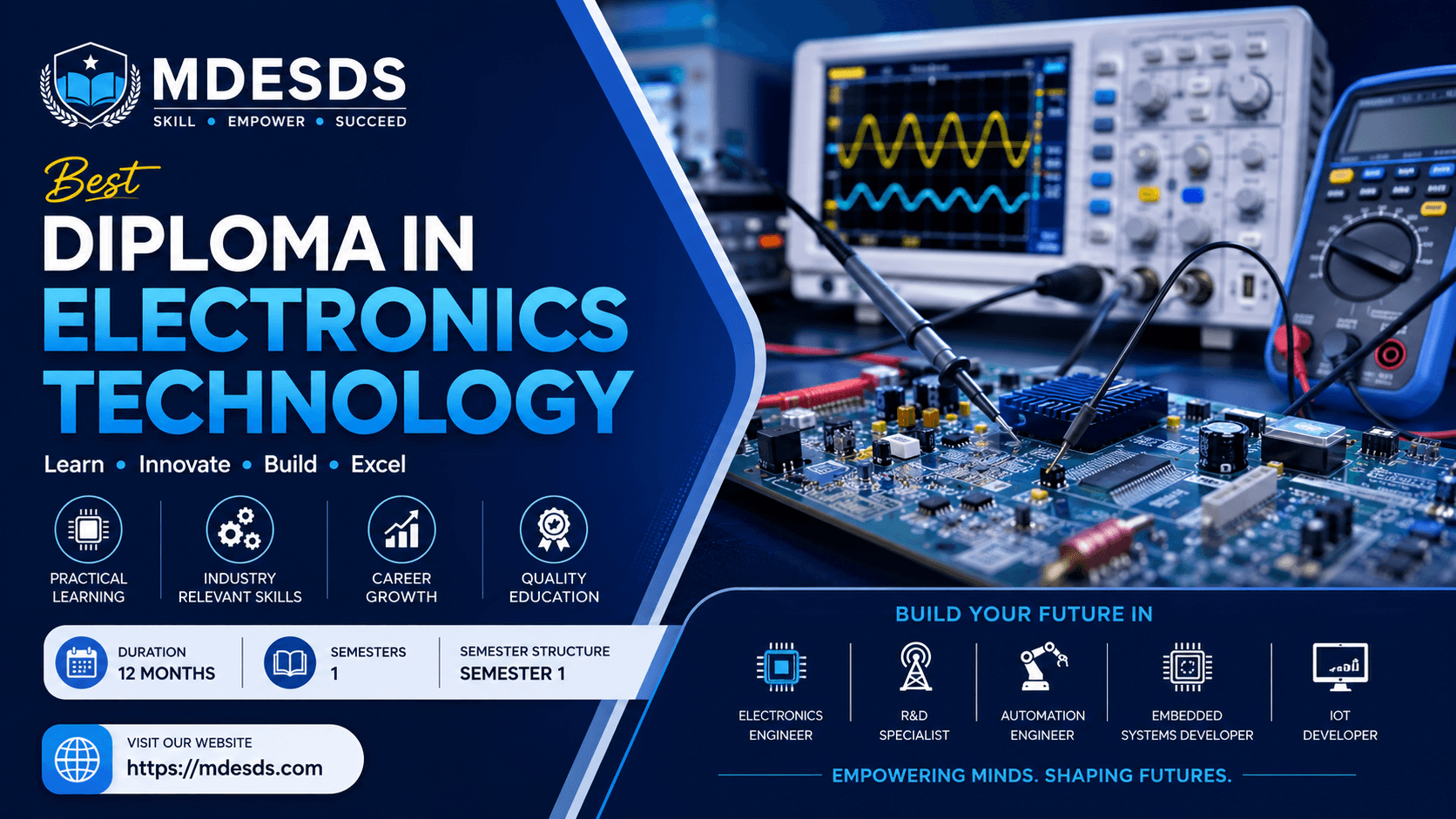
Master core electronics, CAD, and electrical machines with the 12-month hybrid Diploma in Electronics Technology at MDES...
Join MDESDS and build a successful future with industry-recognized diploma, certificate, vocational, and professional training programs. Limited seats available for the current academic session. Apply today and take the next step toward your career goals.